Add your promotional text...
Beyond the Naked Eye: How New Tech Unlocks the Secrets of Soil Life
Source & Further Information: The findings and concepts discussed in this article are largely based on the research presented in the following scientific paper: Lahlali R, Ibrahim DSS, Belabess Z, et al. High-throughput molecular technologies for unraveling the mystery of soil microbial community: challenges and future prospects. Heliyon. 2021;7(10):e08142. Published 2021 Oct 6. doi:10.1016/j.heliyon.2021.e08142. We encourage readers interested in the detailed methodology and complete results to consult the original publication.
9/17/20253 min read
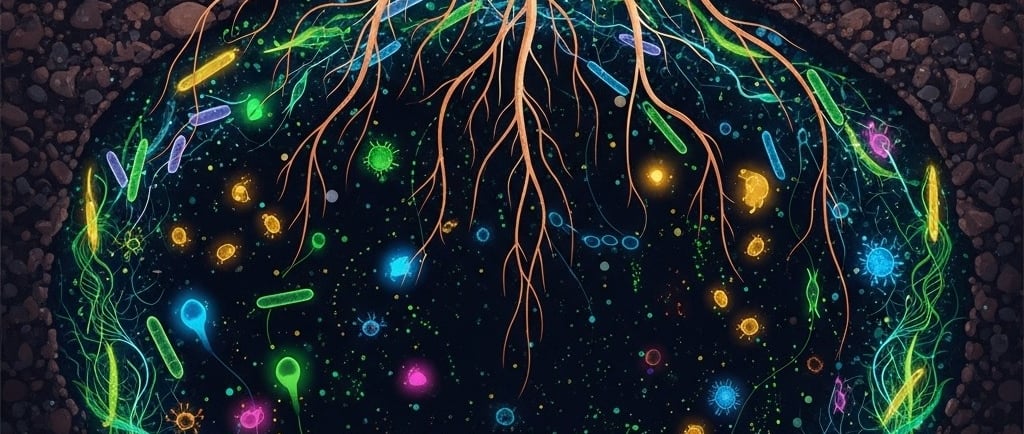
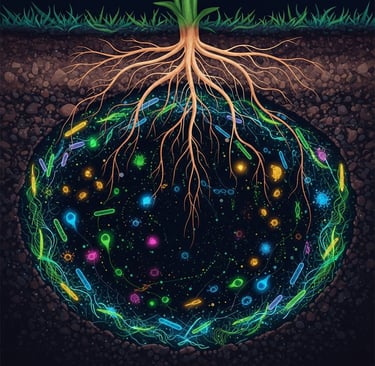
Hold a handful of healthy soil. It may seem like simple dirt, but you're holding a bustling, hidden universe. A single teaspoon can contain more microbes—bacteria, fungi, archaea—than there are people on Earth. These microscopic organisms are the engines of our planet's ecosystems, crucial for soil fertility, plant health, and sustainable agriculture. For centuries, however, this vibrant world was a mystery, as we could only study the tiny fraction (less than 1%) that would grow in a lab dish. It was like trying to understand a massive city by only talking to people who answer a landline phone.
But now, a technological revolution is allowing us to see this unseen world like never before. High-throughput molecular tools are giving us a comprehensive "census" of the soil, revealing who lives there, what they do, and how they interact.
Why This Hidden World Matters: Nature's Support System
Before diving into the new technology, why should we care about these microbes? They perform essential jobs that make life on Earth possible:
Nature's Recyclers: Microbes are the primary decomposers of organic matter, breaking down dead plants and animals to recycle vital nutrients back into the soil for new life to use.
Natural Fertilizers: Certain bacteria can pull nitrogen directly from the air and "fix" it into a form plants can use. Others can unlock phosphorus and other minerals trapped in soil particles, acting as living bio-fertilizers.
Plant Bodyguards: The area around a plant's roots, the "rhizosphere," is a hotbed of activity. Plants release a cocktail of sugars and chemicals from their roots, actively inviting beneficial microbes to come closer. These allies can help protect the plant from diseases, outcompete harmful pathogens, and even help plants withstand stresses like drought.
Unfortunately, intensive agriculture, with its reliance on chemical fertilizers and pesticides, can disrupt these delicate communities, degrading soil health over time. To farm more sustainably, we first need to understand the complex life we're impacting.
The Tech Revolution: From Fingerprints to the "-Omics" Era
Early molecular methods were a step up from petri dishes. Techniques like genetic "fingerprinting" gave us blurry snapshots of the most dominant microbes. But these tools still missed the vast, rare, and often functionally important members of the community—the "rare biosphere."
The real game-changer has been the rise of High-Throughput Sequencing (HTS) and the "-Omics" fields. Instead of looking for individual fingerprints, these tools analyze millions of genetic fragments at once, giving us a deep and detailed picture.
Metagenomics ("Who is there?"): This is the great census of the soil. By sequencing all the DNA in a sample, we can identify thousands of different species, including those we never knew existed.
Metatranscriptomics ("What are they doing right now?"): This looks at RNA, which reveals which genes are currently active. It's like an activity log, telling us if microbes are busy breaking down carbon, fixing nitrogen, or defending against a pathogen.
Metaproteomics ("Which tools are they using?"): This analyzes all the proteins in a sample. Since proteins are the molecular machines that do the work, this tells us exactly which functions are being performed.
What Are We Learning with These New Eyes?
This flood of new data is transforming soil ecology. We can now clearly see how different factors impact the microbial world beneath our feet:
Farming Practices: We've learned that practices like no-till farming and using cover crops can increase fungal abundance and overall microbial diversity, while continuous single-crop planting can reduce it.
Fertilizers & Pesticides: Organic fertilizers tend to boost diversity, while some chemical fertilizers and pesticides can have complex, sometimes negative, effects on key microbial groups.
Climate Change: Increased temperatures and altered rainfall patterns are directly impacting which microbes thrive and which decline, with long-term consequences for soil carbon storage and nutrient cycling.
The Future is in the Soil
While these technologies are incredibly powerful, they come with their own challenges, from extracting clean DNA from complex soil to analyzing the massive datasets they generate. However, they represent a monumental leap forward. By truly understanding the intricate web of life in our soils, we can move towards a more sustainable future. We can develop smarter agricultural practices that work with these microbial allies, rather than against them, to enhance soil fertility, improve crop resilience, and protect our planet's most precious living resource.