Add your promotional text...
Beyond the Spice Rack: Using Rosemary, Thyme, and Oregano to Fight Plant Disease
Source & Further Information: The findings and concepts discussed in this article are largely based on the research presented in the following scientific paper: Greff B, Sáhó A, Lakatos E, Varga L. Biocontrol Activity of Aromatic and Medicinal Plants and Their Bioactive Components against Soil-Borne Pathogens. Plants (Basel). 2023 Feb 5;12(4):706. doi: 10.3390/plants12040706. PMID: 36840053; PMCID: PMC9958657. We encourage readers interested in the detailed methodology and complete results to consult the original publication.
2/13/20263 min read
The Problem Beneath Our Feet: Sick Soil & Chemical Solutions
Our world's growing population demands more food, which puts immense pressure on our agricultural lands. To maximize yields, modern farming has often relied on synthetic chemical pesticides to fight off the invisible enemies in the soil – the bacteria, fungi, nematodes, and viruses that can devastate crops. These chemicals are effective and easy to use, which is why they became the go-to solution.
But there's a growing problem. We now know that the overuse of these pesticides can harm beneficial soil microbes, contaminate our environment, and pose risks to human and animal health. In fact, it's estimated that only 0.1% of synthetic chemicals actually reach their target pathogen, with the rest potentially polluting our ecosystems. As regulations become stricter and environmental concerns mount, the search for safer, more sustainable alternatives is more urgent than ever.
A Fragrant Solution: Aromatic Plants to the Rescue
For centuries, humans have used aromatic and medicinal plants like oregano, thyme, sage, and mint for flavoring, preservation, and medicine. But what if these powerful plants could also serve as nature's own pest control? Researchers have spent decades exploring this very idea, and the results are promising. These herbs produce a vast arsenal of natural chemical compounds, called "secondary metabolites" (like essential oils and phenols), which have potent antimicrobial properties.
This review explores how we can harness the power of these plants – not just their extracts, but also by integrating them into our farming practices – to create a healthier, more sustainable way to protect our crops.
The Invisible Threats: A Tour of Soil-Borne Pathogens
Healthy soil is a bustling metropolis of millions of microbial species, most of which are beneficial. But when the ecosystem is out of balance, harmful pathogens can take over.
Fungi: Pathogens like Fusarium, Rhizoctonia, and Phytophthora are notorious. They can survive in the soil for years, causing root rot, wilting, and other devastating diseases in a huge range of crops.
Bacteria: While less common disease-causers than fungi, bacteria like Ralstonia and Pectobacterium can lead to bacterial wilt and soft rot in important crops like potatoes and tomatoes once they find a way into the plant.
Nematodes: These microscopic roundworms cause an estimated $173 billion in economic losses globally each year. They damage root systems directly, stunting plant growth and making them vulnerable to other infections.
Viruses: With an estimated 10^31 viruses in the soil, these tiny pathogens can be extremely persistent, surviving for decades and causing billions in crop losses annually.
Harnessing Nature's Arsenal: How Aromatic Plants Work
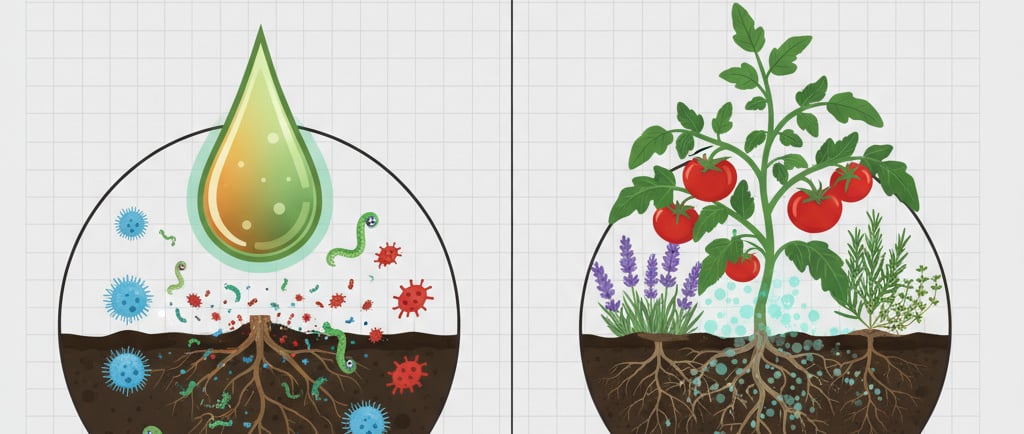
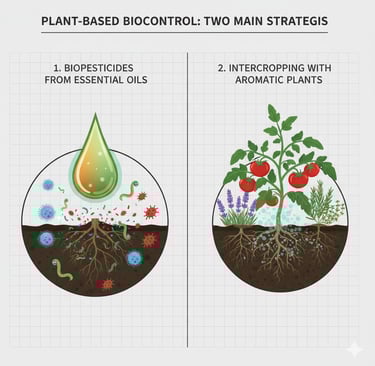
Aromatic plants offer a two-pronged approach to fighting these pathogens: using their concentrated extracts and integrating the plants themselves into agriculture.
1. Potent Extracts: Essential Oils & Phenolic Compounds
The most studied components of these herbs are their Essential Oils (EOs). These complex, volatile liquids are what give plants like oregano, thyme, and mint their characteristic scents. They are rich in antimicrobial compounds like thymol and carvacrol, which can:
Disrupt pathogen cell membranes, causing them to leak and die.
Inhibit the growth and spore germination of fungi.
Paralyze and kill harmful nematodes.
Studies have repeatedly shown that EOs from the Lamiaceae family (oregano, thyme, sage, mint) are highly effective against a wide range of soil-borne fungi and nematodes.
Phenolic Compounds are another class of water-soluble chemicals found in these plants. They are toxic to many pathogens and work by modifying cell permeability, inhibiting enzymes, and interfering with other vital functions of the harmful microbes.
2. Smart Farming: Using the Whole Plant
Beyond just extracts, integrating aromatic plants into farming systems offers broader ecological benefits:
Intercropping & Crop Rotation: Planting herbs like basil or mint alongside crops can diversify the agroecosystem. Their root exudates can change the soil's microbial community, suppressing pathogens and sometimes even boosting the growth and quality of the main crop (like tomatoes).
Green Manure & Composts: Incorporating the plant matter of herbs back into the soil adds organic matter and releases bioactive compounds that can directly inhibit pathogens or support their natural enemies.
Recycling Industry Waste: The huge amount of solid waste left over from the essential oil industry is not just trash – it's a valuable resource. This "distilled biomass" is still rich in bioactive compounds. When composted or used as a soil amendment, it can improve soil health, provide nutrients, and suppress diseases, turning a waste product into a valuable tool for sustainable farming. Hydrosols, the aromatic water co-produced during distillation, also show promising biocontrol activity.
Challenges and the Path Forward
If these natural solutions are so great, why aren't they used everywhere? The path from lab to field is complex. The effectiveness of plant extracts can be inconsistent, varying with plant genetics, growing conditions, and harvest time. Field verification is often lacking, and the regulatory approval process for new biopesticides is long and expensive.
However, the potential is undeniable. As we face the dual challenges of feeding a growing population and protecting our planet, harnessing the natural defensive power of aromatic plants is a critical area of innovation. By combining different non-chemical methods, recycling agricultural by-products, and continuing to research these potent botanicals, we can move towards a more sustainable and resilient agricultural future, one where the solution might just be growing right under our feet.