Add your promotional text...
Black Gold: How Burnt Waste Can Revitalize Our Soil and Boost Microbial Life
Source & Further Information: The findings and concepts discussed in this article are largely based on the research presented in the following scientific paper: Ighalo JO, Ohoro CR, Ojukwu VE, Oniye M, Shaikh WA, Biswas JK, Seth CS, Mohan GBM, Chandran SA, Rangabhashiyam S. Biochar for ameliorating soil fertility and microbial diversity: From production to action of the black gold. iScience. 2024 Dec 2;28(1):111524. doi: 10.1016/j.isci.2024.111524. PMID: 39807171; PMCID: PMC11728978. We encourage readers interested in the detailed methodology and complete results to consult the original publication.
12/19/20253 min read
The Problem of Waste and the Promise of "Black Gold"
Globally, our consumption is rising, and with it, a mountain of agricultural waste—billions of tons every year. When left untreated, this biomass releases greenhouse gases like CO2 and methane, contributing to climate change. While farmers often turn to chemical fertilizers to boost crop yields, these can lead to nutrient runoff and soil acidification. But what if we could solve both problems at once? What if we could turn this waste into a powerful tool for healing our soil?
Enter biochar. Often called "black gold" in agricultural circles, this carbon-rich, charcoal-like substance is created by heating organic waste (like wood chips, crop residues, or manure) in a low-oxygen environment through a process called pyrolysis. Traced back to ancient Amazonian farming practices, modern science is now confirming what indigenous peoples knew: adding this carbonaceous material to soil can have transformative effects.
What Makes Biochar So Special? The Key Benefits
Biochar isn't just burnt wood. Its unique physical and chemical properties make it a powerhouse for soil rejuvenation.
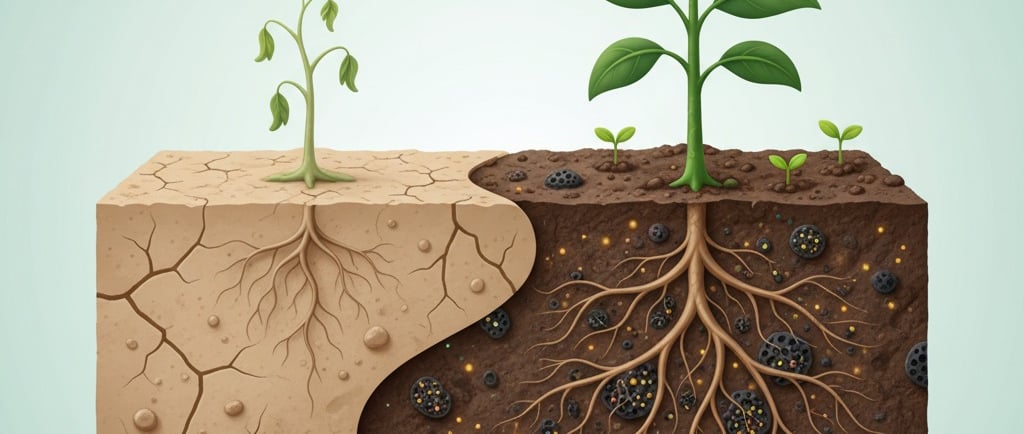
A Sponge for Water and Nutrients: One of biochar’s superpowers is its incredibly porous structure. Like a high-tech sponge, its vast internal surface area helps soil retain both water and essential nutrients. This means less water stress for plants during dry spells and fewer nutrients from fertilizers leaching away into the environment. Studies have shown spinach yields increasing by over 30% and significantly less nitrogen loss in biochar-amended soils compared to traditional NPK fertilizer treatments.
A Luxury Home for Microbes: Healthy soil is teeming with billions of beneficial microorganisms—bacteria and fungi that are crucial for nutrient cycling and plant health. Biochar’s porous structure provides the perfect habitat for these microbes, protecting them from predators and creating stable micro-environments where they can thrive. This boost in microbial diversity and activity is a cornerstone of improved soil fertility.
A Natural Soil Conditioner: Many agricultural soils become acidic over time, partly due to fertilizer use. Biochar is typically alkaline and acts as a natural liming agent, helping to neutralize soil acidity. This creates a more balanced environment, improving nutrient availability and promoting healthy root development. Its physical structure also reduces soil density and compaction, improving aeration and making it easier for roots to grow.
A Long-Term Carbon Sink: Unlike raw organic matter that decomposes and releases carbon back into the atmosphere relatively quickly, the carbon in biochar is highly stable, or "recalcitrant." When added to soil, it can lock away carbon for hundreds or even thousands of years. This makes biochar a powerful tool for long-term carbon sequestration, helping to mitigate climate change.
How is "Black Gold" Made? A Quick Look
The process of creating biochar is evolving. While traditional pyrolysis (heating biomass without oxygen) is common, newer methods like hydrothermal carbonization (using hot, pressurized water) are emerging. The final properties of biochar depend heavily on three key factors:
Feedstock: Biochar made from wood is different from biochar made from manure or straw. Wood-based biochars often have a larger surface area, while manure-based biochars can be richer in nutrients like nitrogen and phosphorus.
Temperature: Higher production temperatures generally lead to a more porous biochar with a higher pH and carbon content, but can reduce the amount of certain surface functional groups.
Heating Rate: Fast vs. slow heating affects whether more solid biochar or more liquid/gas byproducts are produced.
By tuning these parameters, biochar can be tailored to suit specific soil types and agricultural needs, though the goal is always to create a stable, porous product.
The Bottom Line: A Sustainable Future for Our Soil
The evidence is clear: biochar is more than just a waste management technique. It is a multi-faceted soil amendment that enhances fertility, boosts microbial life, improves water retention, and sequesters carbon. By improving the fundamental biological, chemical, and physical properties of soil, it helps plants develop stronger roots, resist stress, and ultimately produce higher yields. While more research is needed to optimize its application for different crops and climates, this ancient "black gold" holds immense promise for building a more sustainable and resilient agricultural future.