Add your promotional text...
Cannabis Goes Legal: But What's the Environmental Price Tag?
Source & Further Information: The findings and concepts discussed in this article are largely based on the research presented in the following scientific paper: Zheng Z, Fiddes K, Yang L. A narrative review on environmental impacts of cannabis cultivation. J Cannabis Res. 2021;3(1):35. Published 2021 Aug 6. doi:10.1186/s42238-021-00090-0. We encourage readers interested in the detailed methodology and complete results to consult the original publication.
9/22/20254 min read
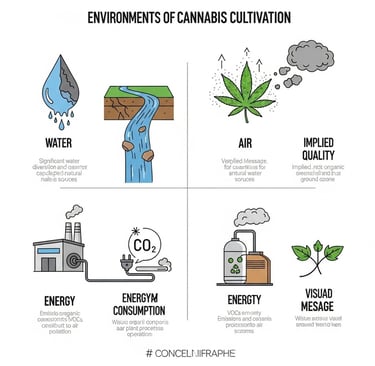
As cannabis legalization sweeps across the globe for both medical and recreational use, a green rush is underway. But behind the booming industry lies a complex and often overlooked question: what is the environmental cost of cultivating this famous plant? From staggering water use and massive energy bills to air pollution and soil damage, the footprint of cannabis farming is significant. A recent scientific review has compiled the evidence, and the findings paint a picture of a crop with a surprisingly heavy environmental impact.
1. A Thirsty Crop: The Water Dilemma
It's an agreed-upon truth: cannabis is a water-intensive plant. Studies show that a single cannabis plant can consume up to 22.7 liters (6 gallons) of water per day during its growing season. To put that in perspective, this is often double the water required by commodity crops like corn, soybeans, or wheat on a daily basis.
Water Diversion: This immense thirst puts a huge strain on local water resources, especially in dry regions like California. To meet the demand, growers often resort to water diversion, pulling water directly from streams, rivers, and groundwater wells. Research has shown this can dramatically reduce water flow in vital watersheds, sometimes to the point where the water needed for cannabis cultivation exceeds the entire streamflow during dry periods.
Water Pollution: The problems don't stop at consumption. Cannabis cultivation, particularly illegal operations, can seriously degrade water quality. To boost growth and control pests, a wide variety of fertilizers, pesticides, rodenticides, and other chemicals are often used. Runoff from rainfall or excessive irrigation can carry these contaminants into nearby streams and groundwater, poisoning the local ecosystem.
Ecosystem Damage: The combination of reduced water flow and chemical pollution is a double whammy for aquatic wildlife. Lower stream levels lead to warmer water, which is detrimental to sensitive species like salmon. The widespread use of potent rodenticides at grow sites has also been directly linked to the poisoning of predators like fishers, a weasel-like mammal, disrupting the entire food chain.
2. Up in the Air: Cannabis and Air Quality
The distinct smell of a cannabis plant is a clue to its impact on the air. Plants naturally release chemicals called Biogenic Volatile Organic Compounds (BVOCs), and cannabis is a prolific emitter.
Outdoor Air Pollution: These BVOCs, primarily terpenes like myrcene, eucalyptol, and limonene, react with sunlight and other pollutants in the atmosphere to form ground-level ozone (smog) and fine particulate matter (PM2.5). In a city like Denver, it was estimated that the emissions from cannabis cultivation could more than double the existing rate of natural BVOC emissions, significantly worsening air quality in a region already struggling to meet ozone standards. Fertilization also releases ammonia, which contributes to particulate matter formation.
Indoor Air Quality: The issue is even more concentrated indoors. Measurements inside cultivation facilities have found very high levels of terpenes. Compounding this, indoor grows require high humidity and often have limited ventilation to control odors. This creates a perfect breeding ground for mold, which poses a respiratory health risk to workers. The use of pesticides in these enclosed spaces also presents a considerable chemical exposure risk.
3. The Massive Energy Bill: Indoor Cultivation's Carbon Footprint
While outdoor growing has its challenges, indoor cultivation has a colossal energy footprint, making it one of the most energy-intensive industries. Annually, cannabis cultivation accounts for at least 1% of the entire nation's electricity consumption in the USA, and up to 3% in California.
Where the Energy Goes: The vast majority of this electricity (nearly 90%) is consumed by three main systems:
High-Intensity Lighting: Indoor grow lamps are incredibly powerful, sometimes approximating the intensity of hospital operating rooms.
HVAC Systems: Maintaining the perfect temperature and humidity day and night requires constant heating, ventilation, and air conditioning.
Dehumidification: Controlling moisture levels is critical and energy-intensive.
Carbon Footprint: This massive energy consumption, largely powered by fossil fuels, translates into a staggering carbon footprint. One study estimated that producing a single kilogram (2.2 lbs) of processed indoor cannabis results in 4,600 kg (over 10,000 lbs) of CO2 emissions. That's equivalent to the annual emissions of an average passenger car!
4. A Double-Edged Sword for Soil
The impact of cannabis on soil is complex, with both negative and potentially positive sides.
Soil Erosion: To create grow sites, especially in remote, forested areas, land is often cleared and terraced. This removal of native vegetation, particularly on steep slopes, directly leads to significant soil erosion, which clogs streams with sediment and damages aquatic habitats.
Phytoremediation Potential: On the flip side, cannabis has a strong ability to absorb heavy metals like lead and cadmium from the soil and store them in its tissues. This bio-accumulative capacity means it has potential as a "phytoremediation crop" – a plant used to help clean up contaminated industrial or agricultural lands.
The Path to Sustainable Cultivation
As the cannabis industry continues to grow, understanding and mitigating these environmental impacts is critical. The science is clear: current common practices are often unsustainable. The future will require a shift towards better management, including precision irrigation to reduce water use, transitioning to energy-efficient technologies like LED lighting, capturing and treating air emissions, and implementing land use practices that prevent soil erosion. Applying tools like life-cycle analysis will be key to helping policymakers, growers, and consumers understand the true environmental cost of cannabis and pave the way for a more sustainable future.