Add your promotional text...
Cannabis vs. Bacteria: A Scientific Look at a Potential New Weapon
Source & Further Information: The findings and concepts discussed in this article are largely based on the research presented in the following scientific paper: Schofs L, Sparo MD, Sánchez Bruni SF. The antimicrobial effect behind Cannabis sativa. Pharmacol Res Perspect. 2021 Apr;9(2):e00761. doi: 10.1002/prp2.761. PMID: 33822478; PMCID: PMC8023331. We encourage readers interested in the detailed methodology and complete results to consult the original publication.
2/23/20264 min read
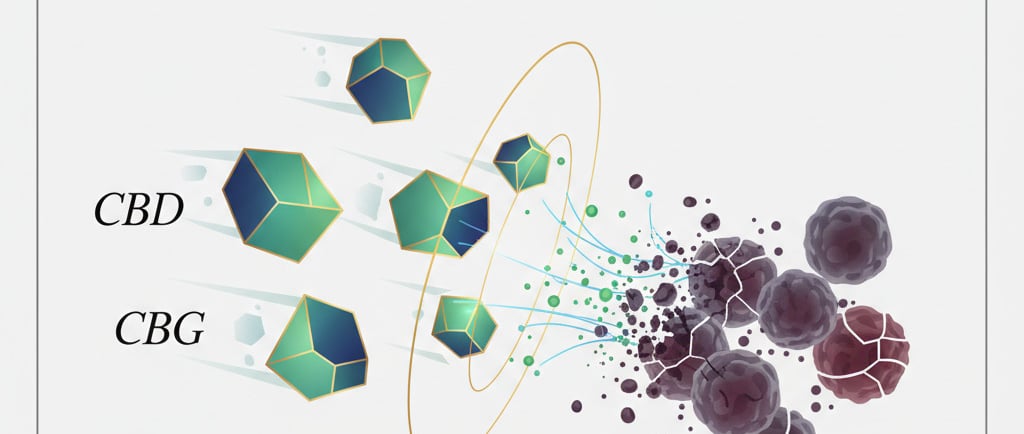
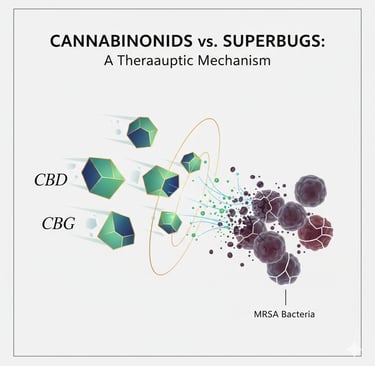
In a world where antibiotic resistance is a growing crisis, scientists are searching everywhere for new weapons to fight "superbugs." What if a powerful solution has been hiding in plain sight for thousands of years? From ancient Chinese texts to Egyptian papyruses, Cannabis sativa has a long and storied history as a medicinal plant. Now, modern science is taking a fresh look at its potential, not for its well-known psychoactive effects, but for its surprising ability to kill harmful bacteria and fungi.
A Race Against Resistance
Infectious diseases are a major global threat, and our arsenal of effective antibiotics is shrinking. Bacteria are incredibly adept at evolving resistance, and the pipeline for new antibiotic drugs has slowed to a trickle. This urgent problem has researchers exploring alternative strategies, including turning to nature's vast chemical library. Plants have historically been a rich source of medicinal compounds, and cannabis is proving to be a particularly fascinating candidate. While its use for pain, anxiety, and epilepsy has gained significant attention, its potential as an antimicrobial agent is a rediscovered frontier.
A Plant Packed with Potential: Cannabinoids, Terpenes, and More
The Cannabis sativa plant is a complex chemical factory, producing over 500 natural compounds. The most famous of these are the cannabinoids, a class of over 120 molecules including the well-known psychoactive Δ9-THC and the non-psychoactive CBD (cannabidiol). Other key cannabinoids include CBG (cannabigerol), CBC (cannabichromene), and CBN (cannabinol). In the fresh plant, these exist in an acid form (like THCA and CBDA) and are converted to their active forms through heat or storage.
But that's not all. Cannabis also produces over 200 terpenes, the aromatic compounds responsible for the plant's distinct smell (also found in pine, citrus, and lavender). Molecules like myrcene, pinene, and limonene are not just for aroma; they have their own documented pharmacological effects, including antimicrobial properties.
With this complex mix of cannabinoids, terpenes, and other compounds like flavonoids, the question for scientists has been: what's actually responsible for the antimicrobial effect, and how potent is it?
Cannabis vs. The Microbes: What the Science Says
Researchers have tested everything from crude plant extracts to highly purified individual cannabinoids against a range of pathogens. A clear pattern has emerged from these in vitro (lab-based) studies:
Potent Against Gram-Positive Bacteria: Consistently, cannabis extracts and isolated cannabinoids like CBD, CBG, and THC show strong antibacterial activity against Gram-positive bacteria. This is a big deal because this group includes major threats like Staphylococcus aureus, including the notorious "superbug" MRSA (Methicillin-Resistant Staphylococcus aureus). Several studies found that major cannabinoids could inhibit MRSA at very low concentrations, sometimes comparable to conventional antibiotics.
Weaker Against Gram-Negative Bacteria: The story is different for Gram-negative bacteria (like E. coli and Pseudomonas aeruginosa). These bacteria have an extra protective outer membrane that makes them much harder to kill. Most studies found that cannabis compounds had little to no effect on them. However, some promising research showed that combining cannabinoids with other substances that disrupt this outer membrane could make them effective.
Fighting Biofilms & Dental Plaque: Beyond just killing free-floating bacteria, cannabinoids have shown the ability to break down biofilms – the slimy, protective shields that bacteria form, which make them notoriously difficult to treat. One study even found that cannabinoids were more effective at reducing bacterial counts in dental plaque than commercial oral care products!
A Helping Hand for Antibiotics: One of the most exciting findings is the potential for synergy. In several studies, CBD was shown to boost the effectiveness of conventional antibiotics. For example, it helped make bacitracin significantly more potent against MRSA and helped other antibiotics work better against E. coli. This suggests cannabinoids could be used in combination therapies to overcome resistance.
How Does It Work? Unraveling the Mechanism
While the exact mechanism is still being fully understood, research points to a primary mode of action: attacking the bacterial membrane.
Cannabinoids like CBG and terpenes like limonene and caryophyllene appear to disrupt the integrity of the bacterial cell membrane, causing it to become leaky and unstable, which ultimately kills the bacterium. This is a different target than many conventional antibiotics, which could be an advantage in fighting resistance. Other potential mechanisms include interfering with bacterial communication systems (quorum sensing) and disrupting cell division.
From the Lab to the Clinic: Hurdles and Hope
Showing something works in a petri dish is one thing; making it a safe and effective medicine is another. Researchers are carefully considering several challenges:
The Immune System Question: Cannabinoids are known to interact with our own endocannabinoid system, which plays a role in regulating immunity. Some studies suggest THC can suppress the immune system, which could be problematic when fighting certain infections. However, other cannabinoids like CBD have shown protective anti-inflammatory effects in some infection models. The effect seems to depend heavily on the specific cannabinoid, the dose, and the type of infection.
Toxicity and Side Effects: The psychoactive effects of high-dose THC are a major limitation for its use as a widespread antimicrobial. This is where non-psychoactive cannabinoids shine. CBD, in particular, has been shown to be well-tolerated with a good safety profile in humans, even at high doses, leading the WHO to conclude it should not be a controlled substance. Other non-psychoactive cannabinoids like CBG and CBC are also showing potent antibacterial activity, making them exciting candidates for future drug development.
Conclusion: A Promising, Rediscovered Path
The evidence is compelling: Cannabis sativa is a treasure trove of compounds with significant antimicrobial properties. While crude extracts can be effective, the real potential lies in non-psychoactive cannabinoids like CBD, CBG, and CBC. They are potent against dangerous Gram-positive bacteria like MRSA, can disrupt biofilms, and may even work synergistically with existing antibiotics.
While more research, particularly in animal models and eventually human trials, is needed to overcome the hurdles of in vivo efficacy and immune interactions, the path is clear. By focusing on these non-psychoactive compounds, scientists may be able to develop a new class of desperately needed antimicrobial agents, turning an ancient herbal remedy into a modern medical solution.