Add your promotional text...
How a Single Bacterium Can Revitalize Soil and Boost Plant Growth
Source & Further Information: The findings and concepts discussed in this article are largely based on the research presented in the following scientific paper: Sumbul A, Ansari RA, Rizvi R, Mahmood I. Azotobacter: A potential bio-fertilizer for soil and plant health management. Saudi J Biol Sci. 2020 Dec;27(12):3634-3640. doi: 10.1016/j.sjbs.2020.08.004. Epub 2020 Aug 8. PMID: 33304174; PMCID: PMC7714982. We encourage readers interested in the detailed methodology and complete results to consult the original publication.
12/29/20253 min read
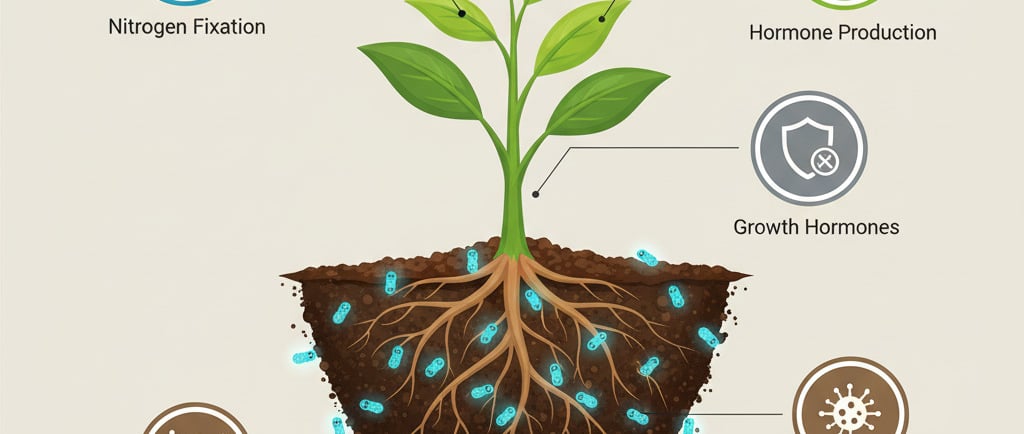
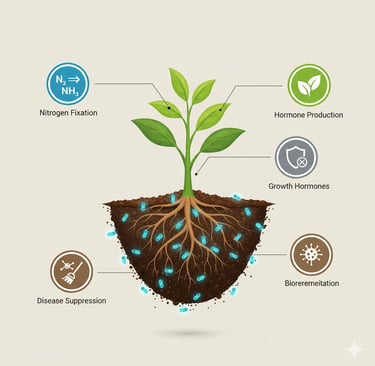
In the quest for healthier crops and more sustainable farming, we often look for the next big thing. But what if one of the most powerful solutions has been living under our feet all along? Meet Azotobacter, a remarkable group of free-living soil bacteria that act as a microscopic, all-in-one support system for plants. From producing natural growth hormones to cleaning up pollutants, this tiny titan has the potential to transform the way we think about soil fertility and plant health.
What is Azotobacter?
First discovered in 1901, Azotobacter is a genus of bacteria with a very special talent: it can grab nitrogen directly from the atmosphere and "fix" it into a form that plants can use, like ammonia. Nitrogen is a crucial nutrient for plant growth, and Azotobacter's ability to provide it naturally makes it an incredible bio-fertilizer. Think of it as a tiny, living fertilizer factory working 24/7 in the soil. These bacteria are tough, too; under harsh conditions, they can form thick-walled cysts to protect themselves, waiting for a better environment to thrive.
The Multi-Talented Toolkit of Azotobacter
So, how exactly does this microbe help plants? Its benefits go far beyond just providing nitrogen. Azotobacter employs a wide range of strategies that directly and indirectly boost plant health.
1. Natural Hormone Production:
Just like humans, plants rely on hormones to regulate their growth. Azotobacter is known to produce several key plant hormones right in the root zone, including:
Auxins (like IAA): Encourage root development, helping plants establish a stronger foundation for absorbing water and nutrients.
Gibberellins & Cytokinins: Stimulate overall plant growth, from germination to maturation.
Studies have shown that crops like tomato, maize, and chickpea grow significantly larger and healthier when treated with Azotobacter, thanks in large part to this hormonal boost.
2. Nitrogen Fixation: The Star Skill
This is Azotobacter's most famous trait. It's estimated that these bacteria can fix up to 20 kg of nitrogen per hectare per year! This process helps maintain soil fertility and can significantly reduce the need for synthetic nitrogen fertilizers, which can be costly and environmentally damaging. Some studies report that using a mix of Azotobacter strains can cut the need for nitrogen fertilizers by as much as 50%.
3. Siderophores: Depriving Pathogens and Delivering Metals
Iron is essential for both plants and microbes, but it's often locked up in the soil. Azotobacter produces special molecules called siderophores that act like tiny claws, grabbing onto iron and making it available. This has a dual benefit:
Delivers Iron to the Plant: The bacteria (and nearby plant roots) can absorb the iron-siderophore complex.
Starves Pathogens: By locking up the available iron, siderophores can deprive harmful fungi and bacteria of this vital nutrient, effectively protecting the plant from disease.
These siderophores are also capable of binding to other important metals like molybdenum and vanadium (needed for nitrogen fixation) and even toxic heavy metals, helping to clean the soil.
4. A Natural Cleanup Crew (Bioremediation):
Azotobacter has an impressive appetite. It can break down a wide range of pollutants, making it a powerful agent for bioremediation:
Oil & Phenols: It can consume oil hydrocarbons and other organic pollutants, helping to purify contaminated soils. It has even been used to transform toxic olive oil mill wastewater into a usable organic liquid fertilizer.
Pesticides & Herbicides: It can degrade harmful chemical residues like Lindane and herbicides like 2,4-D and pendimethalin, turning them into non-toxic products.
Heavy Metals: Strains of Azotobacter can tolerate and bind to toxic heavy metals like cadmium and chromium, reducing their uptake by plants and preventing them from entering the food chain.
The Power of Teamwork: Azotobacter in Consortiums
While powerful on its own, Azotobacter works even better as part of a team. Co-inoculating it with other beneficial microbes has shown synergistic effects:
With Mycorrhizal Fungi: When paired with fungi like Glomus, both microbes benefit. The fungus helps with nutrient uptake, and Azotobacter thrives in the improved root environment, leading to significantly enhanced plant growth.
With Other Bacteria: Teaming up with other bacteria like Rhizobium (on legumes) or Azospirillum has been shown to improve nodulation, nitrogen fixation, and overall crop yields in plants like chickpeas, mustard, and chilli.
Challenges and the Future
Despite its incredible potential, the widespread commercial use of Azotobacter faces hurdles, primarily in developing stable, effective, and affordable formulations that work consistently across different soil types and climates.
However, the future is bright. As we seek more sustainable and eco-friendly agricultural practices, bio-fertilizers like Azotobacter are essential. With modern molecular tools, scientists are working to enhance its natural abilities, creating super-strains that can fix more nitrogen or tolerate harsher conditions. By understanding and harnessing the power of this multitasking microbe, we can move closer to an agricultural system that is not only productive but also in harmony with the environment.