Add your promotional text...
Lecture 23: Predator Reintroduction: Restoring the Food Web
Series: The Sahara Reforestation Project: From Dune Sea to Green Valley Part III: Maturing the Ecosystem and Scaling Up
4/20/20266 min read
Introduction: The Landscape of Fear and the Final Trophic Level
Welcome. Over the course of this series, we have meticulously assembled a new Saharan ecosystem from the bottom up. We began with the abiotic foundations of water and soil. We established the primary producers—a diverse flora from microbial crusts to vast savanna woodlands. We then introduced the primary consumers—the large herbivores, such as the Addax and Oryx, to manage this vegetation. Our ecosystem, however, remains fundamentally incomplete. It is a system regulated only from the bottom up (by resource availability) and by our own top-down technological management. It lacks the critical, self-regulating feedback loop provided by predation.
This lecture will address the final and most challenging step in the biological assembly of our terrestrial ecosystem: the reintroduction of apex and meso-predators. This is the moment we add the top of the food pyramid. We will discuss the profound ecological imperative for this step, focusing on the concept of the "trophic cascade" and the "landscape of fear."
The reintroduction of species like the cheetah and the hyena is not an act of mere ecological ornamentation. It is a deliberate intervention designed to restore a fully functioning, dynamic, and self-regulating food web. We will explore the immense complexities of this process, from species selection and genetic viability to the management of human-wildlife conflict in our newly populated landscape.
The Ecological Imperative: Why Predators Matter
An ecosystem without its apex predators is a system out of balance. The absence of predation leads to a cascade of negative ecological consequences, primarily through the unchecked proliferation of herbivore populations.
Trophic Cascades: This is the central concept. Apex predators exert a top-down control on the ecosystem by regulating the population and behavior of their prey (the herbivores). By keeping herbivore numbers in check, they prevent overgrazing. This, in turn, has a positive, cascading effect on the vegetation, the soil, and even the physical structure of the landscape. The classic example is the reintroduction of wolves to Yellowstone National Park, which led to a reduction in elk populations, allowing for the recovery of willow and aspen trees, which then stabilized riverbanks and brought back beavers and songbirds.
The "Landscape of Fear": Predators do more than just kill; their very presence on the landscape creates what ecologists call a "landscape of fear." Herbivores will actively avoid areas where they perceive a high risk of predation, such as dense thickets or narrow valleys. This behavioral modification is as powerful as direct population control. It prevents herbivores from congregating and overgrazing in any single location, creating a more heterogeneous, patchy landscape with a greater diversity of habitats.
Culling the Weak and Diseased: Predators are agents of natural selection. They selectively prey on the old, the young, the sick, and the weak. This culling action maintains the genetic health and fitness of the herbivore herds and can help to control the spread of diseases.
Without predators, our managed herbivore herds would require perpetual, intensive human intervention (culling, constant virtual fencing adjustments) to prevent them from overwhelming the new savanna, leading to widespread land degradation and ecological collapse. The reintroduction of predators is the only path to long-term, low-intervention ecological stability.
Species Selection: Restoring the Saharan Carnivora
The selection of predator species is a matter of restoring the historical faunal assemblage of North Africa, focusing on species that are adapted to arid environments and open landscapes. The introduction would be phased, likely starting with smaller, more specialized predators and culminating with the apex carnivores.
Phase I: The Meso-predators
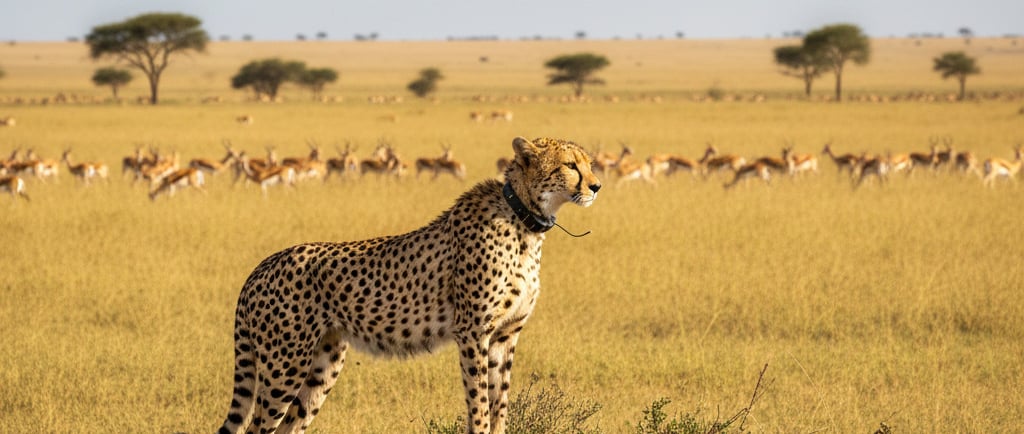
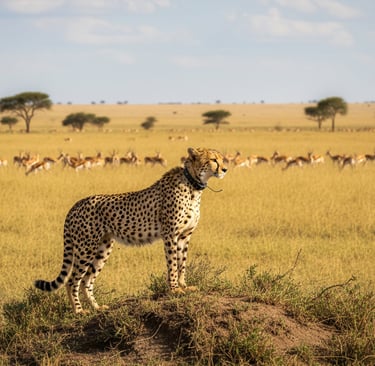
The Cheetah (Acinonyx jubatus hecki - Northwest African Cheetah): This critically endangered subspecies is the ideal first large carnivore for reintroduction. Cheetahs are specialized diurnal hunters of medium-sized gazelles (like the Dama Gazelle we've introduced). Their presence would immediately begin to create a "landscape of fear" for these swifter herbivores. Importantly, they are not a significant threat to the larger, more robust Addax and Oryx, nor are they a major threat to human settlements, making them a relatively "safe" first introduction.
The Striped Hyena (Hyaena hyaena): Unlike its more famous spotted cousin, the striped hyena is primarily a scavenger, not a pack hunter of large game. Its ecological role is that of a "sanitation engineer." It would be responsible for cleaning the landscape of carcasses, from herbivores that have died of natural causes to the partial remains of kills from other predators. This rapid recycling of biomass is a vital ecosystem service, preventing the spread of disease.
Phase II: The Apex Predators
The African Wild Dog (Lycaon pictus): Another highly endangered species, the wild dog is a cooperative pack hunter that preys on a wide range of medium-to-large herbivores. Their introduction would represent a significant increase in predation pressure on the gazelle and younger oryx/addax populations, requiring a healthy and abundant prey base. Their complex social structure and wide-ranging behavior make them a more challenging species to manage.
The Leopard (Panthera pardus pardus): The adaptable leopard would be a key predator in the more rugged, rocky, or densely wooded parts of the new Sahara (e.g., the reforested mountain ranges). As solitary, ambush hunters, they create a different type of predation risk compared to the pursuit-hunting cheetahs and wild dogs.
The Lion (Panthera leo - Barbary Lion lineage): The ultimate apex predator. The historical Barbary lion of the Atlas Mountains was adapted to a drier, more rugged environment. The reintroduction of lions (genetically selected from descendants or a closely related subspecies) would be the final capstone of the predator reintroduction program. Lions are the only predators capable of effectively regulating the populations of the largest adult herbivores, like the Scimitar-horned Oryx. Their presence would signify a fully restored, top-down trophic cascade.
The Reintroduction Process: A Meticulous, Data-Driven Approach
Releasing apex predators into a new environment is one of the most complex and high-stakes operations in conservation biology. It cannot be rushed.
Prey Base Assessment: The primary prerequisite is a robust, stable, and sufficiently large prey population. The introduction of each predator species will only be initiated after years of monitoring confirms that the herbivore populations (gazelles, oryx, addax) have reached a carrying capacity that can sustain both the predation pressure and their own viable populations.
Genetic Sourcing and Breeding: Founding individuals would be sourced from zoos, private reserves, and existing conservation programs worldwide. A comprehensive genomic analysis would be conducted to create a "founder studbook," maximizing genetic diversity and minimizing inbreeding in the new population. These animals would first be brought to large, secure breeding sanctuaries within the Sahara project zone.
Soft Release Protocols: The animals would not be simply released from a cage. A "soft release" protocol would be used.
Acclimatization Bomas: A small group (e.g., a cheetah coalition, a hyena clan, a lion pride) would be released into a very large (many square kilometers), fenced "boma" or acclimatization pen within the target reintroduction area.
Behavioral Acclimatization: Within this boma, the animals would be provisioned with food (carcasses) initially, but would be allowed to acclimate to the local climate, terrain, and the sight and smell of their future prey, which would be grazing outside the fence. For hunters like cheetahs, this period might include opportunities to practice hunting smaller, introduced prey within the boma.
The Release: After several months, once the animals are fully acclimated and exhibiting natural behaviors, the fences are simply dropped, allowing them to disperse into the wider landscape at their own pace.
Intensive Post-Release Monitoring: This is the most critical phase. Every single reintroduced predator would be fitted with an advanced satellite GPS collar. This collar provides real-time data on:
Location and Movement: Tracking their home range establishment, dispersal patterns, and habitat use.
Behavior: Accelerometers can identify specific behaviors like running (a hunt), resting, and feeding.
Predation Events: A sudden stop in a high-speed chase, followed by a prolonged period of low activity at the same location, is a strong indicator of a kill. This allows ecologists to visit kill sites to identify prey species, age, and condition, providing invaluable data on the predator's impact.
Managing Human-Wildlife Conflict
The new Sahara will be a populated landscape. The presence of large carnivores necessitates a proactive strategy for managing human-wildlife conflict.
Zoned Management: The landscape would be zoned. Core wilderness areas, designated as national parks or ecological reserves, would be the primary habitat for apex predators like lions and wild dogs. Agricultural and urban zones would be designated as predator-exclusion zones.
Virtual Fencing and Deterrents: The same virtual fencing technology used for the herbivores would be applied to the predators. The GPS collars would be programmed to create exclusion zones around human settlements and high-density agricultural areas. If a predator crosses a virtual boundary, the collar could emit a series of deterrents, from auditory alarms to other non-lethal stimuli, conditioning them to avoid human-dominated areas.
Livestock Protection: In areas where agriculture and wildlife zones interface, livestock (if any are free-ranging) would require protection, potentially through the reintroduction of traditional methods like livestock-guarding dogs, combined with modern tracking and early-warning systems based on the predators' GPS data.
Conclusion: The Final, Wild Keystone
The reintroduction of apex and meso-predators is the final, audacious step in the biological construction of our new Saharan ecosystem. It is the moment we relinquish a significant degree of direct, top-down control and entrust the regulation of the ecosystem to the complex, co-evolved dynamics of predation and avoidance.
This process is fraught with challenges and requires a level of technological monitoring and adaptive management that is unprecedented in conservation history. However, it is a non-negotiable step. Without the trophic cascades and the landscape of fear generated by a healthy carnivore population, our green Sahara would be an inherently unstable, perpetually managed landscape, forever teetering on the brink of overgrazing and collapse.
By returning the cheetah, the hyena, and eventually the lion to this new savanna, we are restoring not just species, but a fundamental ecological process. We are completing the food web and instilling in the landscape the dynamic tension that is the hallmark of a truly wild, resilient, and self-sustaining ecosystem. With the predators in place, the core biological assembly of the new Sahara is, at last, complete.
Our subsequent lectures will explore the long-term maturation, governance, and global implications of this new world we have created. Thank you.