Add your promotional text...
Lecture 26: Economic Viability: From Subsidies to Self-Sufficiency
Series: The Sahara Reforestation Project: From Dune Sea to Green Valley Part III: Maturing the Ecosystem and Scaling Up
4/27/20266 min read
Introduction: The Trillion-Dollar Question
Welcome. Thus far, our lecture series has detailed a geo-engineering and ecological project of almost unimaginable scale and technical complexity. We have discussed the construction of continental water grids, the creation of soils from sterile sand, and the establishment of vast, managed ecosystems. A persistent, unspoken question has underpinned this entire discussion: how could such an endeavor possibly be funded? The initial capital investment for the required infrastructure—desalination plants, solar farms, pipelines, and logistical support—would undoubtedly run into the tens of trillions of dollars, a sum far exceeding the capacity of any single nation or corporation.
This lecture will address this paramount question of economic viability. We will posit that the Sahara Reforestation Project must be conceived in two distinct economic phases. The first is a multi-decadal phase of massive public-sector investment, structured as a global infrastructure project akin to a planetary-scale Marshall Plan. The second, and the focus of our analysis today, is the deliberate, strategic transition to a self-sustaining, and ultimately profitable, circular economy.
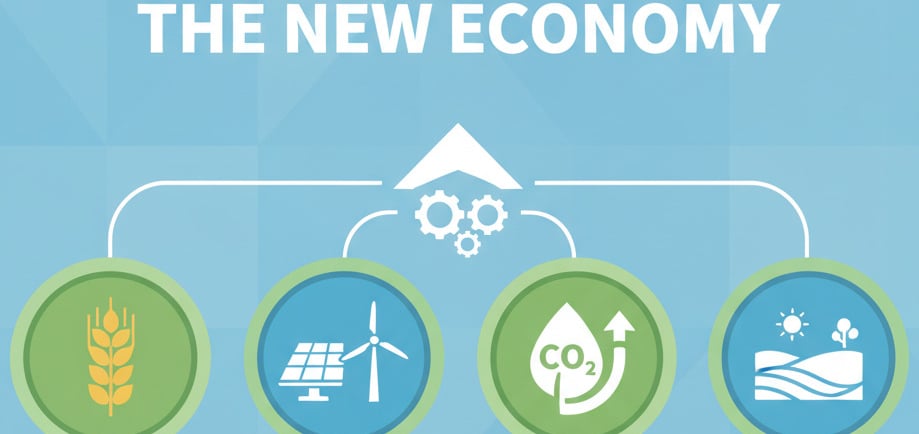
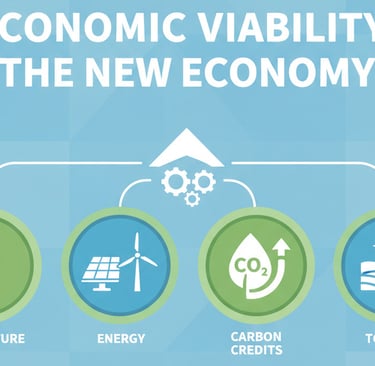
We will analyze the diverse revenue streams that the new Saharan ecosystem will generate. This is not merely an environmental project; it is the creation of a new economic territory. We will explore the economic potential of its outputs: high-value agriculture, sustainable forestry, a globally significant carbon credit market, renewable energy exports, and the development of a unique eco-tourism and research sector.
Phase I: The Foundational Investment - A Global Public-Private Partnership
The initial phase of the project is a pure cost center. It is a foundational investment in planetary infrastructure, and its funding must be structured as such.
Funding Model: The project would be initiated by a global consortium of nations, likely under the auspices of the United Nations and capitalized by contributions from the world's largest economies (G20), sovereign wealth funds, and international development banks (e.g., World Bank, African Development Bank). This public funding would be leveraged to attract massive private investment through public-private partnerships (PPPs) for the construction of specific infrastructure components, such as individual solar farms or desalination plants, with long-term offtake agreements guaranteeing their profitability.
Justification of Investment: The justification for this unprecedented expenditure is not immediate profit, but the mitigation of existential risks and the creation of long-term global benefits. The investment is framed as:
A massive climate change mitigation strategy (via carbon sequestration).
A global food and water security initiative.
A project to combat desertification and reduce climate-driven migration from North Africa.
A geopolitical stabilization effort for the region.
This foundational phase, spanning roughly 50 to 100 years, is the subsidized period during which the ecosystem is built. The economic strategy during this time is focused on cost control and achieving operational milestones. The transition to self-sufficiency begins once the first zones become biologically productive.
Phase II: The Pillars of a Self-Sustaining Economy
As the ecosystem matures, it begins to generate valuable goods and services that form the basis of a new, multi-faceted economy. We will analyze the primary revenue streams.
1. High-Value Agriculture and Horticulture:
This is the most direct and tangible economic output. The combination of abundant solar energy, precisely managed water, and engineered soils allows for the production of a diverse range of agricultural products.
Staple Crops: The large-scale production of drought- and heat-tolerant grains like sorghum and millet will ensure regional food security and create a surplus for export, particularly to other regions in Africa and the Middle East.
High-Value Niche Crops: The controlled environments of the agroforestry systems and CEA modules are ideal for high-value crops. This includes out-of-season fruits and vegetables for European markets, medicinal plants, and specialty crops like saffron or vanilla that require precise conditions.
Halophyte Products: The saline agriculture zones (irrigated by drainage effluent) will produce valuable niche products, such as Salicornia (a gourmet "sea vegetable"), oilseeds from halophytic shrubs, and beta-carotene from Dunaliella salina algae.
Economic Model: This sector moves from sustaining the workforce to becoming a major export industry, generating significant revenue for the Saharan Authority.
2. Sustainable Forestry and Biomass Products:
The vast new forests of the Sahara are not just carbon sinks; they are a managed, productive resource.
Timber: Selective and sustainable harvesting of timber from the managed forests will provide a renewable resource for construction, both within the Sahara and for export. Species would be chosen for the quality and characteristics of their wood.
Bio-energy and Biorefining: A significant portion of the biomass (from forestry thinning, agricultural residues, and dedicated energy crops) will serve as feedstock for the project's biorefineries. This will produce:
Biofuels (e.g., methane, ethanol): To power transport and provide energy storage.
Bioplastics and Biochemicals: Creating a circular economy where plant-based materials replace petroleum-based ones.
Non-Timber Forest Products (NTFPs): The forests will yield a variety of other valuable products, such as Gum Arabic from Acacia senegal and shea butter from Vitellaria paradoxa, which already have established global markets.
3. The Carbon Credit Market (A Multi-Billion Dollar Revenue Stream):
As established in Lecture 24, the Sahara project is one of the world's most powerful carbon sinks. This ecological service is a directly monetizable asset.
Mechanism: Through the rigorous Measurement, Reporting, and Verification (MRV) system, the project will quantify the net tons of CO2 sequestered annually in its biomass and soils.
Issuing Credits: For each verified ton of CO2 removed from the atmosphere, the Saharan Authority will be able to issue one "carbon credit."
The Market: These credits will be sold on the global compliance and voluntary carbon markets to corporations and nations seeking to offset their own emissions. In a future, carbon-constrained global economy, these high-quality, verifiable carbon removal credits will be a premium commodity.
Scale of Revenue: Based on our earlier estimate of 2.5 to 5.0 Gigatons of CO2 sequestered per year, and assuming a conservative future carbon price of
50−50-50−
100 per ton, this revenue stream alone could generate $125 billion to $500 billion annually. This income stream would be sufficient to cover the project's ongoing operational costs and finance its continued expansion.
4. Renewable Energy Export:
The energy infrastructure built to power the project is itself a massive economic asset.
The Solar Supergrid: The vast CSP and PV installations along the coast and throughout the interior will generate far more electricity than is required for desalination and pumping during peak sunlight hours.
Export Infrastructure: This excess energy can be exported. High-Voltage Direct Current (HVDC) transmission lines would be constructed under the Mediterranean Sea to connect the Saharan solar grid directly to the European power grid.
Economic Role: The Sahara would become a clean energy superpower, providing Europe with a stable, large-scale source of renewable electricity, helping to decarbonize the European economy while generating significant export revenue.
5. Eco-Tourism and Research:
As the ecosystem matures, it will become a unique global destination.
Eco-Tourism: The spectacle of a green Sahara, with its new rivers, lakes, and reintroduced wildlife (oryx, gazelles, cheetahs), will be a powerful draw for tourism. High-end, low-impact eco-lodges and guided safaris would create a sustainable tourism industry, providing local employment and revenue.
The "Living Laboratory": The project is the largest ecological experiment in history. The Saharan Agricultural University and its associated research centers (Lecture 30) will attract scientists, students, and investment from around the world, becoming a global hub for research in climatology, arid-land ecology, and sustainable technologies.
The Economic Transition: A Phased Model
The transition from a subsidized project to a self-sufficient economy will be gradual and phased:
Years 0-30: Pure Investment Phase. Dominated by infrastructure construction costs. Minimal revenue.
Years 30-75: Early Revenue Phase. The first agricultural and forestry products come online. A small but growing stream of carbon credits begins to be certified and sold. The first eco-tourism and research outposts are established. The project is still heavily subsidized, but revenue begins to offset a portion of operational costs.
Years 75-150: Growth and Self-Sufficiency Phase. The agricultural and forestry sectors reach maturity and scale, becoming major export industries. The carbon sink reaches its maximum sequestration rate, generating hundreds of billions in annual revenue. The energy export grid is fully operational. At some point within this phase, the project's total annual revenue is projected to exceed its total annual operational and maintenance costs. The project becomes self-sufficient.
Years 150+: Profitability and Reinvestment Phase. The project is now a profitable entity. Revenue is used to finance the maintenance of the existing ecosystem, the continued expansion into new areas, and to pay dividends back to the initial investing consortium or to a sovereign wealth fund for the people of the new Saharan nations.
Conclusion: An Economy Born from an Ecosystem
The economic model for the Sahara Reforestation Project is as ambitious as its ecological model. It requires a long-term vision that transcends typical quarterly-return financial thinking. The initial decades demand a globally coordinated public investment justified by the immense long-term benefits to climate stability and human security.
However, the project is explicitly designed to become an economic engine in its own right. By leveraging the productivity of the new ecosystem, we can create a diversified and resilient economy based on the sustainable export of food, fiber, renewable energy, and the globally critical service of carbon sequestration. The revenue from the carbon credit market, in particular, is the key that unlocks financial self-sufficiency, transforming the project from a global cost into a global asset.
This economic model ensures that the green Sahara is not a fleeting, subsidized garden, but a permanent, productive, and prosperous new territory for humanity. Our next lectures will continue to explore the societal and political dimensions of this new world. Thank you.