Add your promotional text...
Lecture 31: Synthetic Biology for Desert Adaptation
Series: The Sahara Reforestation Project: From Dune Sea to Green Valley Part IV: Advanced Bioscience and Geopolitics
5/8/20266 min read
Introduction: From Editing to Engineering Life
Welcome. In our previous lectures, particularly Lecture 19, we discussed the application of genetic engineering, primarily CRISPR-Cas9, to enhance the stress-tolerance traits of our selected plants. This approach involves editing existing genes—turning their expression up or down, or making precise modifications to their function. This is a powerful tool for optimization. However, as our Saharan ecosystem matures and we face more complex, second-order challenges, we will require biological tools that do not yet exist in nature. We must transition from editing life to engineering it.
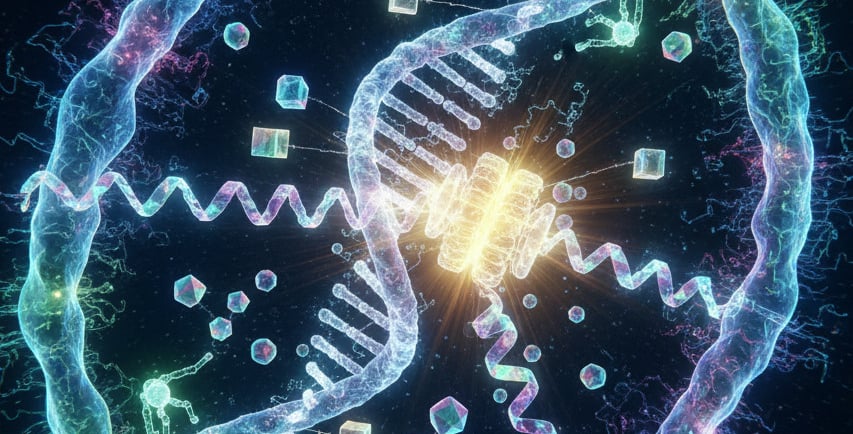
This lecture will introduce the principles and applications of Synthetic Biology within the Sahara Reforestation Project. Synthetic biology is a field that seeks to design and construct new biological parts, devices, and systems, or to re-design existing, natural biological systems for useful purposes. It treats genetic material—DNA—as a programmable medium.
We will explore how this paradigm-shifting technology will be deployed at the Saharan Agricultural University to create novel, single-celled organisms—primarily bacteria and algae—designed to perform specific, highly specialized tasks that are either impossible or inefficient for natural organisms. Our focus will be on engineering microbes for hyper-efficient nitrogen fixation, advanced soil detoxification, and the in-situ production of valuable biomaterials, moving beyond adaptation and into the realm of biological creation.
The Principles of Synthetic Biology: A New Engineering Discipline
Synthetic biology distinguishes itself from traditional genetic engineering through its foundational principles, which are borrowed from electrical engineering and computer science.
Standardization: The creation of a library of standardized, well-characterized genetic "parts" (known as BioBricks). These are snippets of DNA with defined functions—promoters (on/off switches), ribosome binding sites (volume knobs), protein-coding sequences (the functional component), and terminators (stop signs).
Abstraction: The ability to work with these parts based on their function without needing to know every detail of their underlying biochemistry. An engineer can design a circuit using a "light-sensor" part and an "enzyme-production" part without being an expert in the photochemistry of the sensor protein.
Decoupling: The separation of the design phase from the construction phase. A genetic circuit can be designed computationally and then synthesized chemically (by a DNA synthesis company or a "bio-foundry") and inserted into a host organism.
By applying these principles, synthetic biologists can design and build complex genetic circuits—networks of interacting genes and proteins that can perform logical operations, process information, and execute complex tasks within a living cell, much like an electronic circuit.
Application I: Hyper-Efficient Nitrogen Fixation
Nitrogen is the most critical limiting nutrient in our system. While we have introduced natural nitrogen-fixing bacteria (Azotobacter, Rhizobium) and plants (legumes), their efficiency is constrained by their natural metabolic regulation. Synthetic biology allows us to re-engineer this process for maximum output.
The Problem with Natural Nitrogen Fixation: The enzyme responsible, nitrogenase, is extremely energy-intensive and is irreversibly destroyed by oxygen. Natural nitrogen-fixing organisms have evolved complex mechanisms to protect the enzyme (e.g., the specialized heterocysts of cyanobacteria, the anaerobic nodules of legumes), but these regulatory systems often limit the overall rate of fixation.
The Synthetic Biology Solution: A Decoupled Nitrogen-Fixing "Chassis":
The nif Gene Cluster: The ~20 genes responsible for the nitrogenase enzyme complex (the nif genes) can be synthesized as a single genetic part.
The Host Organism ("Chassis"): This nif gene cluster is then transferred into a host bacterium that is easy to grow and has a high metabolic rate, but which does not naturally fix nitrogen (e.g., a non-pathogenic strain of E. coli or a robust soil bacterium like Pseudomonas putida).
Engineering the Circuit: The key is to re-wire the regulation. We can place the nif gene cluster under the control of a synthetic promoter that is not sensitive to oxygen or ammonia levels. For example, we could use a promoter that is constitutively "on" (always active), or one that is activated by an inexpensive, non-toxic inducer molecule that we can add to the soil.
Oxygen Protection: We would simultaneously engineer the host bacterium to produce oxygen-scavenging proteins or to form micro-anaerobic biofilms, creating a protective environment for the new nitrogenase enzyme without requiring the complex cell differentiation of natural fixers.
The Outcome: The result is a synthetic microbe that acts as a dedicated "ammonia factory." It is no longer a multi-tasking organism balancing its own survival with nitrogen fixation; its primary, engineered purpose is to convert atmospheric N2 into ammonia at the maximum possible rate. These microbes would be periodically applied to the agricultural fields like a "living fertilizer," providing a direct and highly efficient source of nitrogen.
Application II: Advanced Bioremediation and Mineral Bio-leaching
The Saharan soils, even after amendment, may contain pockets of high salinity or heavy metal contaminants, and are rich in silicate minerals containing valuable but inaccessible elements.
The Problem: Natural microbes that perform bioremediation or mineral leaching are often slow, specific to certain conditions, or produce undesirable byproducts.
The Synthetic Biology Solution: A Biosensor-Actuator Microbe:
The Sensor Component: We can take a protein receptor that naturally binds to a specific target molecule—for example, a toxic heavy metal ion like cadmium (Cd2+) or a high concentration of sodium (Na+)—and link it to a synthetic promoter. This creates a genetic "sensor" that turns on a gene only when the target molecule is present.
The Actuator Component: We link this sensor to an "actuator" circuit.
For Detoxification: If the sensor detects cadmium, it could activate genes that produce a metal-binding protein (a metallothionein) which is then secreted from the cell, sequestering the toxic metal into an inert, biologically unavailable form.
For Salinity Management: If the sensor detects high sodium, it could activate genes for a powerful ion pump that actively transports sodium into the microbial cell, where it is sequestered, thereby reducing the sodium concentration in the immediate soil solution around a plant's roots.
For Mineral Bio-leaching: We can design a microbe to sense the presence of a target mineral (e.g., phosphate rock). When detected, the sensor activates genes for the hyper-secretion of specific organic acids (like gluconic acid), which are highly effective at dissolving the mineral and releasing the phosphate. This is far more targeted and efficient than relying on the general acid production of natural weathering bacteria.
The Outcome: We can create a suite of "smart microbes" that can be deployed to diagnose and treat specific soil problems. They actively seek out a target substance and execute a programmed response, turning the soil itself into a distributed, self-replicating bioremediation and resource-extraction system.
Application III: In-Situ Production of Biomaterials
The logistics of a continental-scale project are immense. Synthetic biology offers a way to produce essential materials directly on-site, reducing the reliance on complex supply chains.
The Problem: Materials like bioplastics, adhesives, and soil conditioners need to be manufactured in centralized facilities and transported across vast distances.
The Synthetic Biology Solution: Photosynthetic Factories:
The Chassis: The host organism would be a genetically tractable, fast-growing cyanobacterium. As a photosynthesizer, its primary inputs are sunlight, water, and atmospheric CO2—all abundant in the new Sahara.
The Production Pathway: We can insert the genetic pathways from other organisms (or design entirely new ones) that produce valuable materials. For example:
Bioplastics (PHA): By inserting the genes for the polyhydroxyalkanoate (PHA) synthesis pathway, we can engineer the cyanobacteria to use the carbon they fix during photosynthesis to produce this biodegradable polymer, which they store as internal granules. The PHA can then be harvested and used as a thermoplastic.
Soil Binders (EPS): We can identify the genes responsible for producing the most effective Extracellular Polymeric Substances (EPS) for soil binding and water retention from various extremophilic bacteria. We can then create a synthetic gene cluster containing the most potent of these genes and insert it into a fast-growing cyanobacterium, placing it under the control of a strong promoter.
The Outcome: We can create microbes that can be "farmed" in shallow, open-air ponds. These photosynthetic factories would use sunlight and CO2 to continuously produce raw materials. For the EPS-producing strain, the entire pond culture could be periodically harvested and applied directly to agricultural fields as a high-performance, biologically-produced soil conditioner and water-retaining agent.
The Bio-Foundry: The Heart of Martian Innovation
The development of these synthetic organisms would be the central task of the "Genomic Foundry" within the Saharan Agricultural University. This facility would be the biological equivalent of a semiconductor fabrication plant.
Design-Build-Test-Learn Cycle: The foundry would operate on a rapid cycle. Genetic circuits are designed computationally (Design). DNA is synthesized and assembled robotically (Build). The new circuits are inserted into host organisms, which are then grown and analyzed in high-throughput robotic platforms (Test). The performance data is fed back into the computational models to refine the next generation of designs (Learn).
Safety and Biocontainment: This immense power requires equally immense responsibility. A core principle of the foundry would be the design of robust biocontainment systems. All synthetic microbes deployed in the open environment would be engineered with multiple "kill switches" or "genetic firewalls." For example, they could be made auxotrophic for a specific, non-natural amino acid that must be supplied to them, ensuring they cannot survive or reproduce outside their designated operational area.
Conclusion: The Dawn of Ecological Programming
Synthetic biology represents a fundamental shift in our relationship with the living world, from one of observation and modification to one of creation and design. Within the Sahara Reforestation Project, it provides us with an unprecedented toolkit for solving complex, second-order ecological and logistical challenges.
By engineering microbes to function as hyper-efficient living fertilizers, targeted environmental sensors, and decentralized photosynthetic factories, we can dramatically increase the efficiency, resilience, and self-sufficiency of our new Saharan ecosystem. This is the science of ecological programming—writing the living code that will run the operating system of a terraformed landscape.
The establishment of the Genomic Foundry at the Saharan Agricultural University ensures that this process of innovation will be continuous, allowing future generations of terra-formers to design and deploy novel biological solutions to challenges we cannot yet even imagine.
Our next lectures will continue to explore these advanced scientific and ethical frontiers, as we move from the microscopic world of synthetic biology to the macroscopic ethics of managing a new biosphere. Thank you.