Add your promotional text...
Lecture 41: The Ecology of Saharan Wetlands I - The Chotts and Sebkhas
Series: The Sahara Reforestation Project: From Dune Sea to Green Valley Part V: Mature Ecosystems and Global Interconnections
6/1/20266 min read
Introduction: From Salt Scars to Living Wetlands
Welcome. In our grand narrative of greening the Sahara, we have often focused on the creation of freshwater rivers and lush savannas. However, the Sahara's topography is not a uniform canvas; it is punctuated by vast, hyper-arid, endorheic basins—depressions with no outflow, where any water that collects can only leave through evaporation. These are the chotts and sebkhas of North Africa, landscapes defined by stark, brilliant white salt crusts and a near-total absence of macroscopic life.
As our terraforming project progresses, these basins will inevitably begin to fill. They will become the natural sinks for the saline effluent from our agricultural drainage systems and, in some cases, for the re-emerging, mineral-rich groundwater. A naive approach might view these areas as sacrifice zones, sterile evaporation ponds for our project's waste products. This lecture will present a radically different vision.
We will explore the deliberate ecological engineering of these salt pans, transforming them from geological scars into highly productive, functional, and biodiverse saline wetlands. Our discussion will focus on the unique geochemistry of these new water bodies, the introduction and establishment of a specialized suite of halophytic plants and microbial communities, and the critical ecological services these wetlands will provide, from supporting continental migratory flyways to enhancing local climate moderation.
The Geochemical Foundation: The Nature of a Saharan Salt Lake
The water that will fill the chotts and sebkhas is fundamentally different from the freshwater in our engineered rivers. It is a brine, with its chemistry defined by two primary sources:
Agricultural Drainage Effluent: This water, collected by our subsurface drainage systems (Lecture 8), has percolated through agricultural soils, leaching out the salts that accumulated from irrigation. Its chemical signature will be dominated by the ions present in the original irrigation water and fertilizers, primarily sodium (Na+), calcium (Ca2+), magnesium (Mg2+), chloride (Cl-), sulfates (SO42-), and nitrates (NO3-).
Re-emerging Groundwater: In some basins, the rising water table will bring ancient, highly mineralized groundwater to the surface. The composition of this water will reflect the geology of the deep aquifers, often rich in dissolved carbonates, sulfates, and various trace elements.
As this water pools in the endorheic basins and is concentrated by evaporation, the salinity will rise dramatically, often exceeding that of seawater (which is ~35 parts per thousand, ppt) and reaching hypersaline levels (>50 ppt). The specific ionic composition of the brine will determine which organisms can thrive. The management of these lakes will involve a degree of water balance engineering—controlling inflow to maintain salinity levels within a target range that is optimal for the desired biological community.
The Biological Pioneers: Assembling a Halophilic Ecosystem
Life in high-salinity environments requires a suite of sophisticated biochemical and physiological adaptations. We will not be introducing typical freshwater organisms, but a curated community of "halophiles"—salt-lovers. The ecosystem will be built from the bottom up.
1. The Microbial Foundation: Cyanobacterial and Algal Mats
The first life to be established will be microscopic. We will inoculate the shallow, sunlit waters with a consortium of halophilic and hypersaline-tolerant microorganisms.
Cyanobacteria: Species like Aphanothece halophytica and certain strains of Nostoc can thrive in high salt concentrations. They are photosynthetic primary producers, forming dense, multi-layered microbial mats on the sediment surface. These mats are miniature ecosystems in themselves, performing several crucial functions:
Oxygenation: They produce oxygen, which is critical for other organisms in the water column and sediment.
Nitrogen Fixation: Many of these cyanobacteria can fix atmospheric nitrogen, providing the foundational source of this limiting nutrient for the entire wetland ecosystem.
Sediment Stabilization: The sticky extracellular polymeric substances (EPS) they secrete bind the fine sediments of the lakebed, preventing them from being re-suspended by wind and wave action and improving water clarity.
Halophilic Algae: In the water column (pelagic zone), we will introduce free-floating, salt-loving algae. The star of this group is Dunaliella salina, a unicellular green alga that is famous for its ability to survive in salt concentrations approaching saturation. To cope with the extreme osmotic stress, it produces massive quantities of glycerol. To protect itself from intense UV radiation, it produces beta-carotene, the pigment that gives hypersaline lakes their characteristic pink or reddish hue. This algal bloom is the base of the food web.
2. The Macrophytic Engineers: Salt-Marsh Vegetation
While the open water is dominated by microbes, the shorelines and shallow flats will be engineered into productive salt marshes. This requires the introduction of vascular halophytes.
Low Marsh Zone (Regularly Inundated):
Salicornia (Glasswort or Sea Asparagus): This succulent halophyte is an ecosystem engineer. It can tolerate being submerged in highly saline water. Its dense stands slow down wave action, trap sediment, and create a complex physical habitat. Certain species are also a gourmet edible crop, providing an immediate economic product.
Suaeda (Seepweed): Similar to Salicornia, various Suaeda species are highly effective at colonizing saline mudflats, contributing to sediment accretion and providing food and habitat.
High Marsh Zone (Irregularly Inundated):
Spartina (Cordgrass): Species like Spartina alterniflora are masters of salt marsh construction. Their extensive root and rhizome systems form a dense, tough mat that is incredibly effective at stabilizing soil and building up organic matter.
Juncus (Rushes): Hardy rushes adapted to saline conditions will be planted in the transition zone between the high marsh and the terrestrial environment, providing another layer of habitat complexity.
Planting Strategy: The establishment of these salt marshes would be an active restoration process, involving the planting of millions of nursery-grown seedlings and the use of techniques like biodegradable coir logs to protect the shoreline during initial establishment.
3. The Invertebrate Consumers:
With the primary producers (microbes and plants) in place, we can introduce the primary consumers.
Brine Shrimp (Artemia salina) and Brine Flies (Ephydra hians): These are the key grazers in the hypersaline open water. They are incredibly adapted to high salinity and feed voraciously on the algal blooms (Dunaliella). Their populations can explode, creating a massive secondary biomass.
Benthic Invertebrates: In the less saline sediments of the salt marshes, we will introduce a community of salt-tolerant worms, crustaceans, and mollusks. These organisms play a vital role in bioturbation (mixing the sediment) and decomposition, breaking down dead plant matter and recycling nutrients.
Ecological Services of the New Saline Wetlands
These engineered wetlands are far from being simple waste ponds. They are designed to provide a suite of valuable ecological services.
Biodiversity Hotspots for Migratory Birds: This is perhaps their most significant global contribution. The Sahara lies at the heart of the African-Eurasian Flyway, a major global route for migratory birds. The historical desert is a massive, perilous barrier for these birds. The creation of a network of vast, highly productive wetlands will have a revolutionary impact.
A Critical Stopover Site: The new chotts and sebkhas will become critical "stopover" sites, providing millions of migratory shorebirds, waders, and waterfowl with a place to rest, refuel, and overwinter.
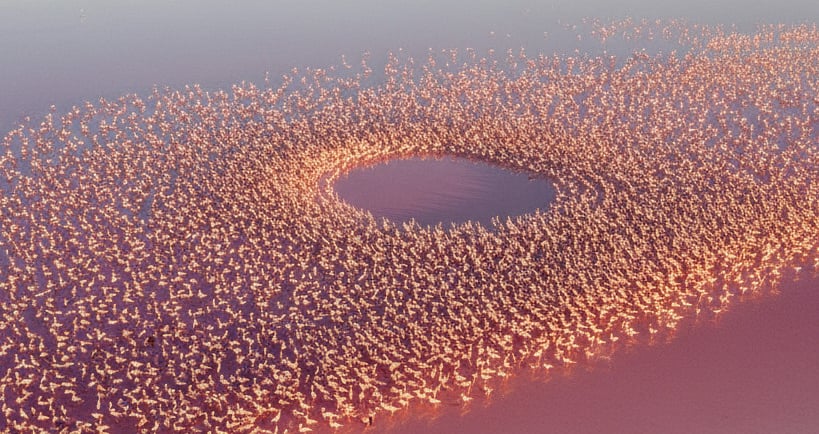
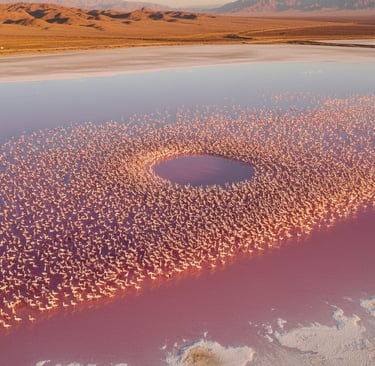
Abundant Food Source: The enormous productivity of brine shrimp, brine flies, and other invertebrates will provide a super-abundant food source for these birds. We can expect to attract vast flocks of flamingos, avocets, stilts, and numerous species of sandpipers and ducks.
Conservation Impact: This will provide a significant boost to the populations of many of these species, some of which are threatened, by reducing the mortality associated with their trans-Saharan migration.
Local Climate Moderation (Evaporative Cooling):
As vast, shallow bodies of water, the transformed chotts will have a high rate of evaporation. While this leads to increased salinity, it also acts as a massive natural air conditioner.
The process of evaporation consumes enormous amounts of thermal energy (the latent heat of vaporization). This will lead to a significant cooling of the local and regional air mass, particularly downwind of the lakes, creating a more clement microclimate and potentially enhancing local rainfall through "lake-effect" precipitation.
Nutrient Sequestration and Processing:
These wetlands act as highly efficient bio-filters. They are the terminal sink for the nutrient-rich agricultural drainage water. The algae and salt-marsh plants will avidly take up the nitrates and phosphates from this water, preventing these nutrients from accumulating to toxic levels.
This process effectively sequesters these nutrients into living biomass, which then supports the entire wetland food web. It is a productive and sustainable method of "waste" treatment.
Economic Byproducts:
Aquaculture: The brackish lagoons at the freshwater interface are prime locations for the aquaculture of salt-tolerant fish species (like certain Tilapia or Mullet).
Biochemicals: The Dunaliella salina algae can be harvested for its valuable beta-carotene, a natural food colorant and antioxidant.
Harvestable Crops: Salicornia can be harvested as a gourmet vegetable. Other halophytes can be harvested for animal fodder or biofuel feedstock.
Mineral Harvesting: The most hypersaline evaporation ponds can be used for the commercial harvesting of salt and other minerals.
Conclusion: An Asset, Not a Liability
This lecture has reframed our perspective on the saline landscapes of the Sahara. The chotts and sebkhas, and the brine they will collect, are not a problem to be disposed of, but a unique resource to be cultivated. By applying the principles of ecological engineering and introducing a carefully selected suite of salt-loving life, we can transform these sterile salt pans into some of the most productive and biodiverse ecosystems in the new Sahara.
These saline wetlands will become the ecological jewels of the project, shimmering with the pink hue of algae and teeming with millions of migratory birds. They will act as local climate moderators, nutrient-processing powerhouses, and centers of a new saline-based economy. Their creation is a testament to a core principle of this project: in a truly sustainable system, there is no such thing as waste, only misplaced resources. By finding the right biological tools, we can turn a liability into a vibrant, living asset.
Our next lecture will explore the complementary freshwater ecosystems, detailing the ecology of the newly formed oases and the riparian zones along our engineered rivers. Thank you.