Add your promotional text...
Sick Soil, Stressed Plants: Can Beneficial Bacteria Save Our Natural Remedies?
Source & Further Information: The findings and concepts discussed in this article are largely based on the research presented in the following scientific paper: Wang G, Ren Y, Bai X, Su Y, Han J. Contributions of Beneficial Microorganisms in Soil Remediation and Quality Improvement of Medicinal Plants. Plants (Basel). 2022 Nov 23;11(23):3200. doi: 10.3390/plants11233200. PMID: 36501240; PMCID: PMC9740990. We encourage readers interested in the detailed methodology and complete results to consult the original publication.
2/11/20264 min read
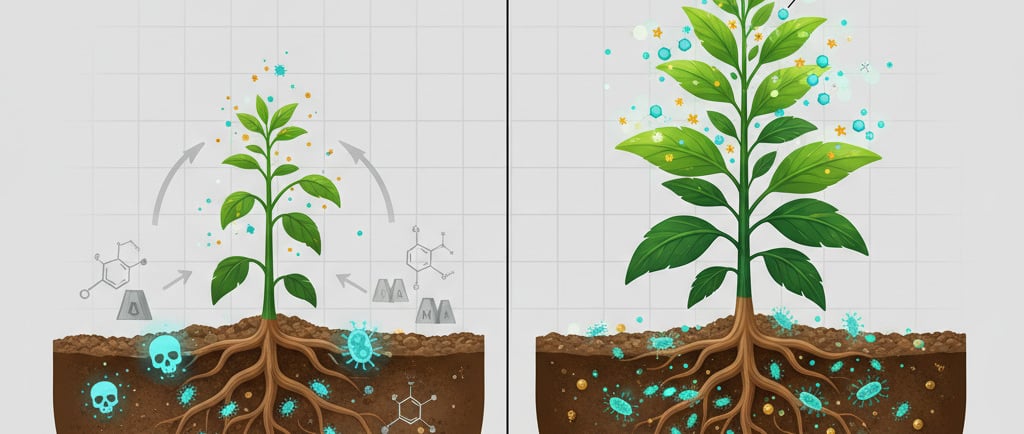
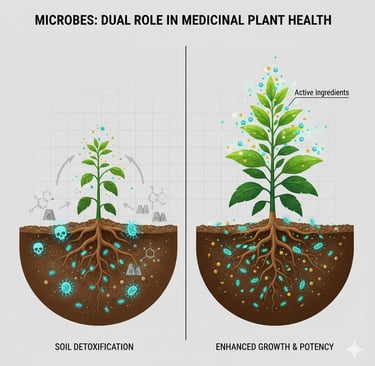
Medicinal plants are nature's pharmacy, offering powerful compounds that prevent and treat disease. But what happens when the very soil these vital plants grow in becomes sick? A hidden crisis of soil degradation—caused by modern farming practices, pollution, and contamination—is threatening the growth and quality of these essential resources. Fortunately, a solution might lie with the soil's smallest inhabitants: beneficial microorganisms.
The Problem: A Foundation in Crisis
The quality of a medicinal herb is directly tied to the health of its soil. However, modern agriculture has created a perfect storm of soil problems:
Continuous Cropping Obstacle: Planting the same crop in the same field year after year, especially long-lived medicinal herbs like ginseng, drains specific nutrients and leads to a buildup of self-toxic chemicals (allelochemicals) secreted by the plants' own roots. This also creates an imbalance where harmful pathogens flourish while beneficial microbes decline, leading to increased disease.
Soil Contamination: Industrial waste, sewage irrigation, and the overuse of chemical fertilizers and pesticides have loaded our soils with harmful substances. Heavy metals (like cadmium, lead, arsenic) and persistent organic pollutants can stunt plant growth. Worse, they get absorbed by the medicinal plants and accumulate in their tissues, posing a serious health risk to consumers who eventually ingest them.
Physical & Chemical Damage: Intensive farming can also lead to soil hardening (compaction), salinization (salt buildup), and acidification (a drop in pH). These conditions make it harder for roots to grow, access water, and absorb essential nutrients, putting the plant under constant stress.
While physical and chemical cleanup methods exist, they are often expensive, inefficient, and complex. This has pushed scientists to look for a more natural, economical, and eco-friendly solution.
The Solution: Nature's Cleanup Crew
Enter the soil microbiome. The ground beneath our feet is teeming with billions of microorganisms—bacteria and fungi—that act as the land's primary restoration engine. These tiny allies are essential for a healthy ecosystem, and scientists are now harnessing their power to heal our damaged agricultural soils.
Beneficial microbes can tackle degraded soil in two main ways: by cleaning up the mess (bioremediation) and by actively helping the plants grow stronger (growth promotion).
How Microbes Clean and Restore the Soil
Beneficial microorganisms are master recyclers and detoxifiers. They employ several clever mechanisms to deal with soil contaminants:
Breaking Down Pollutants: Many microbes, such as strains of Pseudomonas and Bacillus, produce powerful enzymes that can break down complex and toxic pesticides and organic pollutants into simpler, harmless molecules like water and carbon dioxide. Think of them as a microscopic cleanup crew that eats chemical waste. For example, one study showed that spraying a specific bacterium (Paenibacillus polymyxa) helped dramatically reduce the levels of five different pesticides in ginseng roots.
Handling Heavy Metals: Microbes deal with toxic heavy metals in a few ways. They can physically trap metal ions on their cell surfaces, preventing them from being absorbed by plants (a process called biosorption). They can also use chemical reactions (redox reactions) to change the metals into a less toxic or less mobile form. This effectively locks the metals away in the soil, reducing their harm to the plant and preventing them from entering our food chain.
Restoring Soil Fertility & Structure: Beyond cleanup, microbes are crucial for soil health. Nitrogen-fixing bacteria pull nitrogen from the air and convert it into a form plants can use. Other microbes specialize in "unlocking" phosphorus and potassium that are bound up in soil minerals. The sticky substances and thread-like networks (hyphae) produced by bacteria and fungi also help bind soil particles together, improving soil structure, water retention, and resistance to erosion.
How Microbes Directly Boost Medicinal Plants
The benefits don't stop at the soil. The microbes living in the "rhizosphere"—the bustling zone immediately surrounding plant roots—act as personal bodyguards and growth coaches for the plants:
Enhancing Stress Resistance: By cleaning up toxins and improving nutrient availability, microbes reduce the overall stress on the plant. They can also trigger the plant's own internal defense systems (a process called Induced Systemic Resistance), making the plant more resilient to future threats like drought or disease.
Fighting Off Diseases: A healthy community of beneficial microbes outcompetes harmful pathogens for space and resources. Some even produce antibiotic compounds or enzymes that directly attack disease-causing fungi and bacteria, protecting the plant from root rot and other common ailments.
Improving Medicinal Quality: Here's where it gets truly exciting. Microbes can directly influence the production of the "active ingredients"—the valuable secondary metabolites that give medicinal plants their power. By interacting with the plant's roots, microbes can act as "elicitors," sending signals that stimulate the plant's defense pathways, which often leads to an increased accumulation of valuable compounds like tanshinones in Salvia, or artemisinin in Artemisia.
The Future is Microbial: "Probiotics" for Plants
Harnessing this potential is moving from the lab to the field in the form of microbial inoculants. Think of these as "probiotics" for soil. These products contain specific, proven strains of beneficial microbes (Bacillus, Pseudomonas, etc.) that can be added to the soil to kickstart the restoration process and promote healthy plant growth. Sometimes, a "consortium" or cocktail of different microbes working together is even more effective than a single strain.
While there's still much to learn about the complex interactions between different medicinal plants, their unique root secretions, and specific microbial communities, the path forward is clear. By understanding and utilizing these powerful microbial allies, we can move towards a more sustainable and ecological way of cultivating high-quality medicinal plants, ensuring the health of our soils, our remedies, and ourselves.