Add your promotional text...
The Green Team: How Algae and Bacteria are Teaming Up for Better Farming
Source & Further Information: The findings and concepts discussed in this article are largely based on the research presented in the following scientific paper: Kang Y, Kim M, Shim C, Bae S, Jang S. Potential of Algae-Bacteria Synergistic Effects on Vegetable Production. Front Plant Sci. 2021 Apr 12;12:656662. doi: 10.3389/fpls.2021.656662. PMID: 33912211; PMCID: PMC8072153. We encourage readers interested in the detailed methodology and complete results to consult the original publication.
11/28/20253 min read
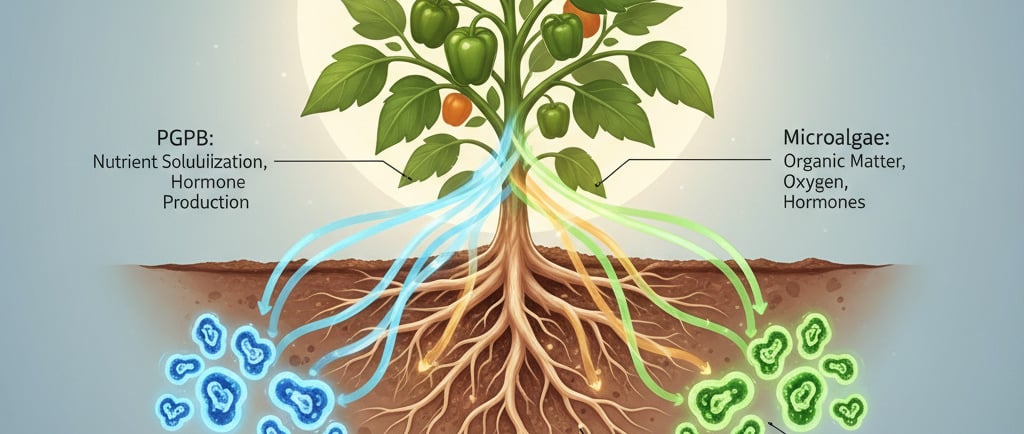
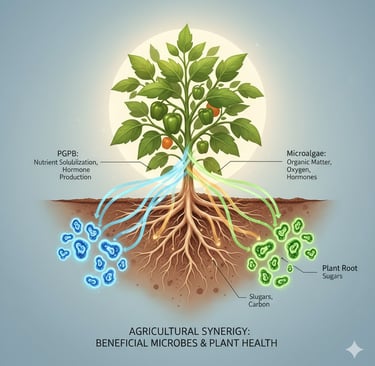
For decades, modern farming has relied on a powerful but costly tool: chemical fertilizers. While they boost crop yields, their overuse has come at a steep price, leading to polluted waterways, hardened soil, and a decline in the very microbial life that keeps our earth fertile. But what if we could harness nature's own growth-promoters instead? Scientists are increasingly looking to a dynamic duo – tiny microalgae and beneficial soil bacteria – as a sustainable alternative. While each is a powerhouse on its own, new research reveals that when they work together, the results can be truly transformative for our farms and our food.
The Problem with Over-Fertilizing and the Rise of Biofertilizers
It's a simple equation: more fertilizer equals more food. But this approach has backfired. Excessive chemical fertilizers, especially nitrogen, don't just stay in the field. They leach into groundwater, contribute to greenhouse gas emissions, and can make soil acidic and compacted. This harsh environment harms plant roots and decimates the populations of beneficial microbes that are essential for long-term soil health.
Enter biofertilizers. Instead of synthetic chemicals, biofertilizers are preparations containing living microorganisms. These tiny allies work in harmony with plants, improving soil fertility naturally. They break down organic matter, unlock nutrients like nitrogen and phosphorus to make them available for plants, and can even produce growth-promoting substances like plant hormones. This approach paves the way for a more sustainable, eco-friendly agriculture that works with nature, not against it.
Meet the Players: Two Microbial Champions
Two main groups of microorganisms are at the forefront of this biofertilizer revolution:
Plant Growth-Promoting Bacteria (PGPB): As we've discussed before, these are the workhorses of the soil. Bacteria like Bacillus and Pseudomonas form close relationships with plant roots. They can directly feed plants by "fixing" nitrogen from the air or solubilizing phosphorus locked in the soil. They also act as tiny bodyguards, producing compounds that suppress disease-causing pathogens, helping to keep plants healthy and resilient.
Microalgae: These microscopic, photosynthetic powerhouses are more than just pond scum. Species like Chlorella and Spirulina are packed with bioactive compounds. They produce a cocktail of plant-friendly substances, including growth hormones (like auxins and cytokinins), amino acids, and vitamins. When applied to crops, microalgae extracts can stimulate root and shoot growth, improve fruit quality, and even help plants defend against stress. They are a renewable, natural source of plant biostimulation.
Stronger Together: The Algae-Bacteria Synergy
While using either PGPB or microalgae alone has proven beneficial, scientists are discovering that the real magic happens when they are combined. In nature, these two groups often live together in a symbiotic, mutually beneficial relationship.
What algae give bacteria: Through photosynthesis, algae produce oxygen and organic carbon compounds, which bacteria need to thrive and perform tasks like breaking down organic matter.
What bacteria give algae: In return, bacteria release carbon dioxide (which algae need for photosynthesis) and provide essential micronutrients, like B-vitamins, that act as vital enzyme co-factors for the algae.
This efficient nutrient exchange allows both partners to flourish. When this powerful duo is applied to agriculture, the benefits are amplified.
The Evidence: Better Vegetables with Team Microbe
Numerous studies have shown that co-applying microalgae and PGPB leads to better results than using either one alone.
In lettuce, a combined treatment of Chlorella vulgaris and a mix of PGPB significantly increased plant weight and carotenoid content, especially under stressful summer conditions.
For common beans, a triple-threat inoculation of Rhizobium, Azospirillum, and the cyanobacterium Anabaena boosted grain production by an incredible 84% – effectively replacing the need for nitrogen fertilizer.
In onions, combining Spirulina platensis extract with a nitrogen-fixing bacterium enhanced plant growth, productivity, and bulb quality, all while reducing production costs.
Unpublished data on tomatoes also showed that a combined treatment of Chlorella fusca and Bacillus amyloliquefaciens promoted finer root growth and significantly increased plant yield and fruit sugar content compared to single treatments.
The reason for this success is likely due to a combined-arms approach. The algae and bacteria tackle plant growth and health from different angles simultaneously – one might be better at producing a certain hormone while the other excels at unlocking phosphorus. Together, they provide a more comprehensive and robust support system for the plant.
The Future is Collaborative
While applying a single, well-understood microbial strain is often simpler for commercialization, the evidence is mounting that co-culture or combination systems are the future of effective biofertilization. By harnessing the natural synergy between microalgae and beneficial bacteria, we can enhance microbial diversity in the soil, improve plant resistance to disease, and boost the productivity and quality of our vegetable crops. Further research will continue to uncover the intricate molecular mechanisms behind this powerful partnership, paving the way for a truly sustainable and productive agricultural future.