Add your promotional text...
The Living Fertilizer: How Microbial Helpers are Revolutionizing Farming
Source & Further Information: The findings and concepts discussed in this article are largely based on the research presented in the following scientific paper: Khan A, Singh AV, Gautam SS, Agarwal A, Punetha A, Upadhayay VK, Kukreti B, Bundela V, Jugran AK, Goel R. Microbial bioformulation: a microbial assisted biostimulating fertilization technique for sustainable agriculture. Front Plant Sci. 2023 Dec 12;14:1270039. doi: 10.3389/fpls.2023.1270039. PMID: 38148858; PMCID: PMC10749938. We encourage readers interested in the detailed methodology and complete results to consult the original publication.
12/8/20253 min read

The Challenge: Our Soil is Tired
For decades, modern agriculture has relied heavily on chemical fertilizers. While they boosted crop yields, this approach has come at a cost. Overuse has damaged the natural health of our soil, harmed beneficial microbes, and even led to hazardous chemicals building up in the food chain. With a growing global population and increasing pressure on our farmlands, we urgently need a smarter, greener alternative.
Enter microbial bioformulations – a powerful, eco-friendly solution that harnesses the power of nature's tiniest helpers to restore soil health and boost crop growth sustainably.
What Exactly is a "Bioformulation"?
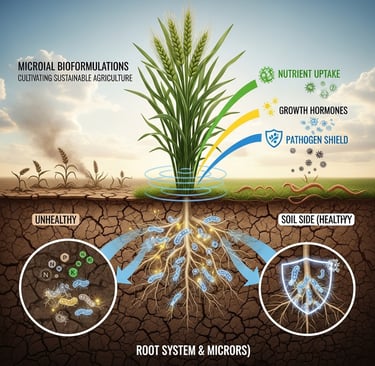
At its core, a bioformulation is a carefully crafted product containing beneficial, living microorganisms. Think of it as a probiotic for plants. These aren't just any microbes; they are specifically selected strains of bacteria and fungi with proven "superpowers" that help plants thrive. These abilities include:
Fixing nitrogen from the air.
Unlocking nutrients like phosphorus and potassium trapped in the soil.
Producing plant-growth hormones.
Protecting plants from harmful pathogens.
But creating an effective bioformulation is much more complex than just putting microbes in a bag. The main goal is to deliver a sufficient number of living, active microbes to the field and ensure they survive long enough to do their job. This is where the science of formulation comes in.
The Delivery System: Choosing the Right "Vehicle" for Microbes
A key ingredient in any bioformulation is the carrier. This is the material—solid or liquid—that houses the microbes, providing them with protection, nourishment, and a stable environment from the lab to the field. The choice of carrier is critical to the product's shelf life and effectiveness.
Solid Formulations: These often come in powder or granular form. Historically, peat was the "gold standard" carrier due to its high moisture retention and protective qualities. However, alternatives like talc (popular in India), vermiculite, charcoal, and even composted agricultural waste are widely used. A newer, exciting method involves encapsulation, where microbes are coated in a biodegradable polymer (like alginate from seaweed) to create tiny beads. This "microencapsulation" provides a durable shield, protecting the microbes from harsh conditions and allowing for a slow, controlled release into the soil. Some alginate bead formulations have been shown to keep microbes alive for years!
Liquid Formulations: These are often easier to apply and can have an even longer shelf life than many solid products. They consist of microbial suspensions in liquids like broth, oils, or water, often with special additives like glycerol or trehalose (a type of sugar) that protect the microbes from stress and help them stick to seeds or roots.
It's Not a Magic Bullet: The Challenges of Microbial Helpers
While the potential of bioformulations is enormous, getting them to work consistently in the real world is a major challenge. A microbial strain that performs beautifully in the lab might struggle in a farmer's field due to:
Competition: The new microbes must compete with the billions of native microorganisms already in the soil.
Environmental Stress: Conditions like heat, UV radiation, and soil pH can harm the inoculants.
Quality Control: Studies have shown that some commercial biofertilizers suffer from contamination or don't contain the specified number of living microbes.
Knowledge Gap: Farmers need clear, scientific guidance on which products to use for their specific crops and soil, and how to apply them correctly.
Biosafety: It's crucial to ensure that the selected microbes are not opportunistic pathogens that could pose a risk to human or environmental health.
The Future is Microbial and Metabolite-Driven
To overcome these challenges, the future of bioformulations is heading in exciting directions. Researchers are focusing on developing products with broad tolerance to different temperatures and conditions.
One of the most promising frontiers is the use of cell-free formulations. Instead of delivering live microbes, these products contain the beneficial metabolites that the microbes produce—things like enzymes, antibiotics, and metal chelators. These formulations can have a much longer shelf life and bypass the issue of microbial survival, while still delivering many of the plant-boosting benefits.
By focusing on better carriers, smarter delivery methods, and harnessing the power of microbial metabolites, we can pave the way for a more sustainable, productive, and environmentally friendly future for agriculture—one powered by the planet's smallest but mightiest allies.