Add your promotional text...
The Phosphorus Problem: Meet the Microbes That Can Solve It
Source & Further Information: The findings and concepts discussed in this article are largely based on the research presented in the following scientific paper: Timofeeva A, Galyamova M, Sedykh S. Prospects for Using Phosphate-Solubilizing Microorganisms as Natural Fertilizers in Agriculture. Plants (Basel). 2022 Aug 15;11(16):2119. doi: 10.3390/plants11162119. PMID: 36015422; PMCID: PMC9414882. We encourage readers interested in the detailed methodology and complete results to consult the original publication.
2/4/20263 min read
The Hidden Hunger in Our Soils
Every plant, from the smallest houseplant to a towering stalk of corn, relies on a few key ingredients to thrive. After nitrogen, the most critical nutrient is phosphorus. It’s the backbone of DNA, a key player in capturing energy from the sun (photosynthesis), and essential for developing strong roots, healthy stems, and abundant seeds. Without enough phosphorus, crop yields plummet.
So, what's the problem? Our soils actually contain a lot of phosphorus – but there's a catch. Up to 99% of it is locked away in insoluble mineral and organic forms, making it completely unavailable for plants to absorb. Think of it like a pantry full of canned food with no can opener.
For decades, the conventional solution has been to apply massive amounts of chemical phosphate fertilizers. Unfortunately, this is incredibly inefficient. As soon as these fertilizers hit the soil, a large portion (up to 95%!) reacts with minerals like calcium, iron, and aluminum, quickly becoming locked up and inaccessible once again. This not only wastes money but also contributes to soil acidification and water pollution. Clearly, we need a smarter, more sustainable way to unlock the phosphorus already present in the soil.
Nature's Can Openers: Phosphate-Solubilizing Microbes
Fortunately, nature has its own solution: a diverse group of soil microorganisms, including bacteria and fungi, that have evolved the amazing ability to "solubilize" phosphate. These Phosphate-Solubilizing Microorganisms (PSMs) act like microscopic can openers, breaking down locked-up phosphorus compounds and converting them into a soluble form that plant roots can easily absorb.
These tiny allies are gaining huge attention in sustainable agriculture because they are environmentally friendly, cost-effective, and highly efficient. Inoculating soils or crops with PSMs is a promising strategy to improve plant nutrition, boost yields, and reduce our reliance on chemical fertilizers. These microbes don't just help with phosphorus; they can also support plant growth by producing growth-promoting hormones and improving the availability of other micronutrients.
How Do They Do It? The Mechanisms Behind the Magic
PSMs use a two-pronged approach to unlock phosphorus, depending on whether it's trapped in inorganic minerals or organic matter.
Breaking Down Minerals with Organic Acids:
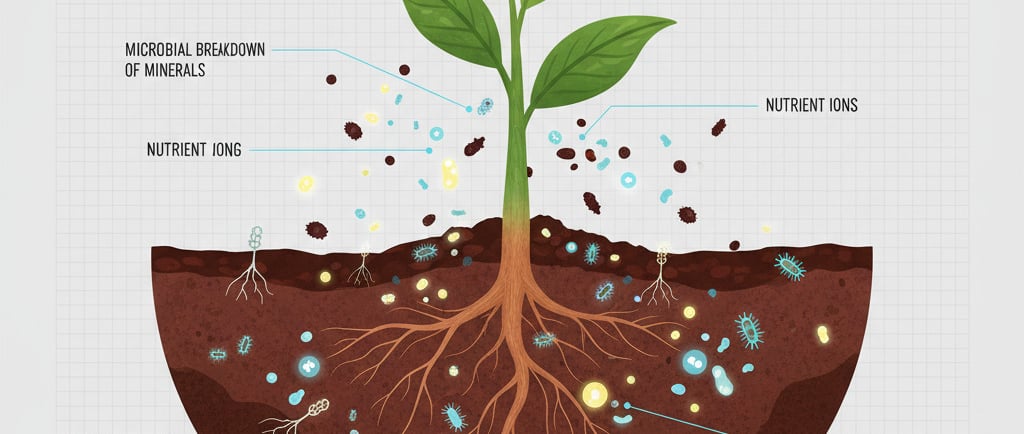
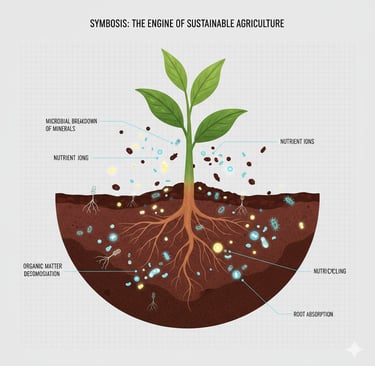
The primary way Phosphate-Solubilizing Bacteria (PSB) tackle insoluble mineral phosphates (like rock phosphate) is by producing and secreting various low-molecular-weight organic acids. Acids like gluconic, citric, lactic, and oxalic acid lower the pH in the immediate vicinity of the soil particles. This change in acidity helps to dissolve the mineral complexes, releasing soluble phosphate ions that the plant can then take up. It's a targeted, localized chemical reaction powered by the bacteria's metabolism. Interestingly, the type of acid produced can vary greatly between different bacteria, with some being more effective than others.Decomposing Organic Matter with Enzymes:
A significant portion of soil phosphorus is also tied up in dead organic matter in complex molecules like phytate. Plants can't use this form directly. To solve this, PSMs release powerful enzymes into the soil.Phosphatases: These are enzymes that snip off phosphate groups from various organic molecules.
Phytases: These are specialized enzymes that specifically break down phytate, which is a major reservoir of organic phosphorus in the soil.
By secreting these enzymes, microbes effectively "digest" the organic matter and release simple, soluble phosphate, making it available for themselves and nearby plants.
The Bigger Picture: A Symphony in the Soil
The role of these microbes goes even deeper. They don't just release phosphorus; they also temporarily store it in their own biomass. This "immobilized" pool of phosphorus is protected from being locked up by soil minerals and is slowly released back into the soil as microbes die and decompose, creating a sustainable, long-term nutrient cycle.
This ability to balance between solubilizing (releasing) and immobilizing (storing) phosphorus is what makes the soil microbiome so critical for soil fertility. It's a dynamic system that PSMs help to regulate.
A New Frontier in Sustainable Farming
In a world focused on food security and environmental health, leveraging the power of phosphate-solubilizing microorganisms as "biofertilizers" is a new frontier. Inoculating seeds or soil with effective strains of bacteria (like Bacillus, Pseudomonas) and fungi (Aspergillus, Penicillium) has been shown to increase phosphorus uptake, promote root development, and ultimately raise crop yields.
These microbial inoculants are not just a substitute for chemical fertilizers; they represent a move towards a more integrated, intelligent, and sustainable way of managing soil fertility. By working with nature's own powerful systems, we can create healthier soils and more resilient crops for the future.