Add your promotional text...
The Soil's Secret Superheroes: How We Can Engineer a Healthier Earth
Source & Further Information: The findings and concepts discussed in this article are largely based on the research presented in the following scientific paper: Araujo R. Advances in Soil Engineering: Sustainable Strategies for Rhizosphere and Bulk Soil Microbiome Enrichment. Front Biosci (Landmark Ed). 2022 Jun 16;27(6):195. doi: 10.31083/j.fbl2706195. PMID: 35748271. We encourage readers interested in the detailed methodology and complete results to consult the original publication.
11/3/20253 min read
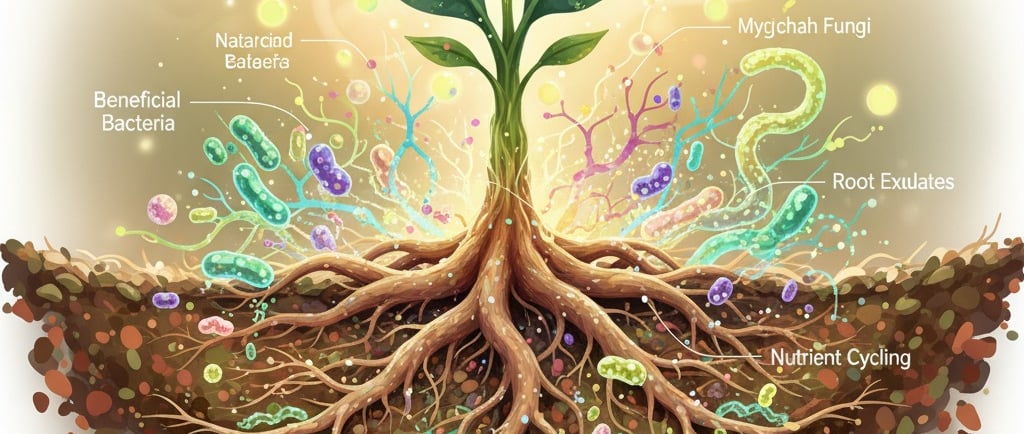
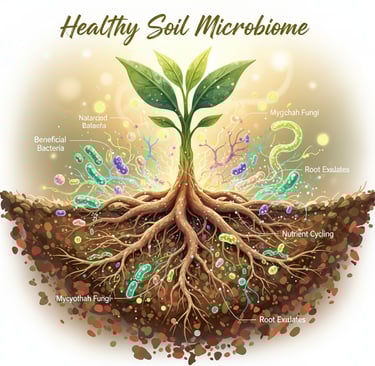
Beneath our feet lies an invisible world teeming with life, a universe in every handful of dirt. Scientists have discovered that a single gram of forest soil can contain up to 10,000 different bacterial species, and some estimates push that number towards a million! This bustling underground community, the soil microbiome, is the engine that drives our planet's health, from cycling nutrients and decomposing matter to ensuring the very fertility of our farmlands. But modern practices like long-term monoculture can degrade this vital ecosystem. The good news? We're learning how to engineer it back to life.
The Power of the Rhizosphere
While the entire soil is alive, the most intense action happens in the "rhizosphere" – the bustling zone directly around a plant's roots. Plants actively cultivate this area, releasing a rich cocktail of sugars, amino acids, and vitamins from their roots. This creates a unique and nutrient-rich buffet, attracting a dense and diverse community of microbes.
These microscopic allies aren't just getting a free meal; they form a symbiotic partnership with the plant. In return for the food, they help make essential nutrients available, protect the plant from disease, and contribute to the overall stability and health of the ecosystem. This intricate dance between roots and microbes is fundamental to plant life as we know it. However, when this diversity is lost—often seen in fields where the same crop is grown year after year—plant performance drops, and soilborne diseases can take hold.
A Toolkit for Soil Improvement
So, how can we actively manage and enrich this vital underground world? Scientists and farmers have developed a range of strategies, from age-old wisdom to modern innovations, each with its own impact on the soil microbiome.
Traditional Wisdom: Crop Rotation
A simple yet powerful strategy, rotating crops prevents the soil from being exhausted by a single plant's demands. It breaks disease cycles and naturally encourages a more diverse cast of microbial characters. Different plants attract different microbes, so rotation acts like a gradual reset, improving soil structure, carbon storage, and overall health without a heavy reliance on chemicals.Feeding the Soil: Organic Amendments
Instead of just adding chemical fertilizers, we can feed the soil's living ecosystem.Compost & Manure: These are classics for a reason. They add a rich blend of nutrients and introduce their own beneficial microbes, such as Pseudomonas, Bacillus, and the fungus Trichoderma, which are famous for suppressing plant diseases and promoting growth.
Biochar: This is a modern twist – a special type of charcoal created from organic waste. Its porous structure acts like a high-rise apartment complex for microbes, providing shelter and access to water and nutrients, which in turn benefits plants and can help fight soilborne diseases.
The "Probiotic" Approach: PGPB & Biocontrol
Perhaps the most targeted strategy is the direct application of beneficial microbes. These are often called Plant Growth-Promoting Bacteria (PGPB) or biocontrol agents. They can be coated onto seeds or sprayed onto plants, colonizing the roots early on to give seedlings a head start. These "probiotics for plants" help by:Producing plant hormones to stimulate growth.
Unlocking nutrients in the soil.
Outcompeting or directly fighting off harmful pathogens.
Radical Restoration: Soil Transplantation
In cases of severely degraded or diseased land, one of the most effective (though expensive) strategies is soil transplantation. By introducing a layer of healthy, diverse topsoil, it's possible to "re-inoculate" a struggling ecosystem with a full suite of beneficial microbes, restoring productivity.
The Future is Biological
For decades, agriculture has relied heavily on agrochemicals to boost yields. While effective, this has often come at a cost to the environment and the soil's natural microbial life. A staggering 60% of nitrogen from fertilizers is often not absorbed by plants and can pollute groundwater.
The future of sustainable agriculture lies in integrating these biological strategies. By understanding, monitoring, and enriching the soil microbiome, we can reduce our dependence on harsh chemicals, improve nutrient use, and build more resilient farming systems. The challenge is moving these powerful ideas from the lab to the field consistently, but by focusing on the health of our invisible underground allies, we can improve our own health, our food security, and the long-term sustainability of our planet.