Add your promotional text...
The Unsung Superfood: How Beans, Lentils, and Peas Can Heal Our Planet
Source & Further Information: The findings and concepts discussed in this article are largely based on the research presented in the following scientific paper: Kumar S, Gopinath KA, Sheoran S, Meena RS, Srinivasarao C, Bedwal S, Jangir CK, Mrunalini K, Jat R, Praharaj CS. Pulse-based cropping systems for soil health restoration, resources conservation, and nutritional and environmental security in rainfed agroecosystems. Front Microbiol. 2023 Feb 3;13:1041124. doi: 10.3389/fmicb.2022.1041124. PMID: 36817102; PMCID: PMC9935831. We encourage readers interested in the detailed methodology and complete results to consult the original publication.
11/14/20253 min read
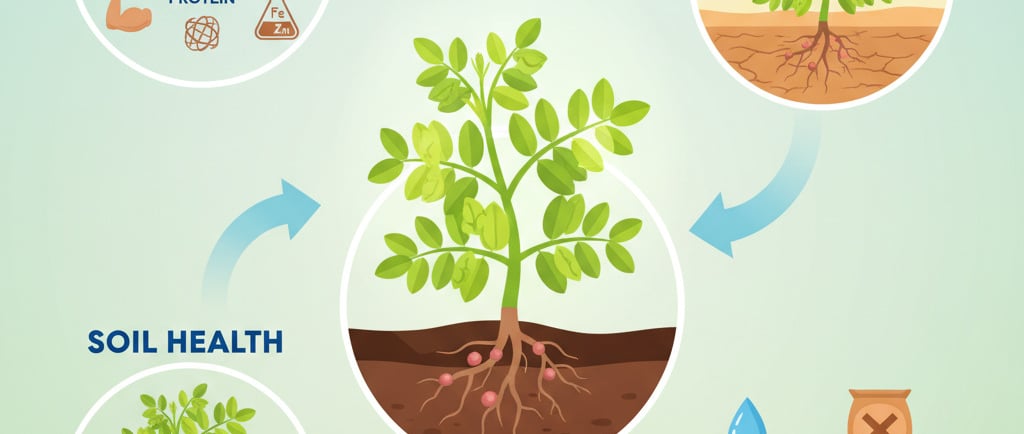
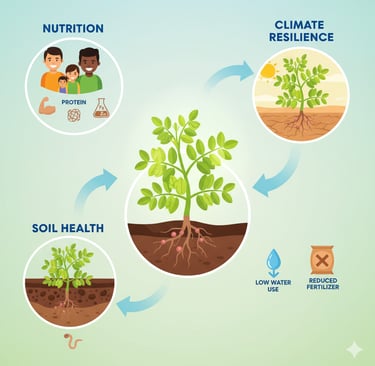
In a world grappling with hunger, climate change, and degrading farmland, we often look for complex, high-tech solutions. But what if one of the most powerful tools for a healthier future has been in our fields all along? Meet the humble pulse—the food group that includes beans, lentils, chickpeas, and dry peas. Far from being just a simple pantry staple, these crops are a nutritional powerhouse and an ecological game-changer, especially for the most vulnerable agricultural lands on Earth.
A World in Need, A Solution Overlooked
Globally, billions of people lack access to a healthy diet, with hundreds of millions suffering from malnutrition, particularly a lack of protein and essential minerals. While pulses are packed with these very nutrients, their global consumption has stagnated. They make up a mere 1% of the total global food supply, often ignored by farmers and policymakers in favor of dominant cereal crops like rice and wheat.
This oversight is most critical in "rainfed" regions—the 80% of the world's farmland that relies solely on rainfall, not irrigation. These areas, home to many of the world's poorest people in Africa, South Asia, and Latin America, face immense challenges: poor soil, unpredictable weather, and continuous resource depletion. It is precisely in these harsh environments that the unique superpowers of pulses can shine brightest.
The Triple Benefit: People, Planet, and Profit
Pulses offer a powerful trifecta of benefits that address nutrition, environmental health, and economic stability.
1. The Nutritional Powerhouse
Pulses are one of nature's most perfect foods.
Protein-Packed: On average, they contain two to three times more protein than rice or wheat. This protein is also far cheaper and more sustainable to produce than animal sources.
Rich in Fiber: A single cup of cooked chickpeas can provide half of your daily fiber requirement, aiding in digestive health, weight management, and reducing the risk of heart disease and diabetes.
Mineral Marvels: Pulses are loaded with minerals often lacking in modern diets. They are exceptionally rich in iron (2-16 times more than rice or maize), zinc, potassium (helping to lower blood pressure), and magnesium.
Vitamin Source: They are an excellent source of B vitamins, especially folate (B9), which is crucial for cell growth and division.
For billions of people, incorporating more pulses into their diet is a direct pathway to overcoming malnutrition and improving overall health.
2. The Soil's Best Friend
Unlike most crops that deplete soil nutrients, pulses actively heal and restore the land they grow on.
They Make Their Own Fertilizer: Pulses have a remarkable ability called "biological nitrogen fixation." They partner with soil bacteria to pull nitrogen—an essential plant nutrient—directly from the air and convert it into a usable form. This means they require little to no synthetic nitrogen fertilizer.
They Leave a Gift for the Next Crop: After harvest, a significant amount of this fixed nitrogen is left in the soil, reducing the fertilizer needs of the next crop (like wheat or maize) by 25-30%.
They Build Healthy Soil: Pulse root systems and crop residues improve soil structure, creating more stable "aggregates" that are resistant to erosion. They also boost soil carbon, increase water-holding capacity, and create a thriving environment for beneficial microbes.
3. The Climate-Smart & Resource-Efficient Crop
In an era of climate change and dwindling resources, pulses are the perfect fit for a more sustainable farming future.
Climate Change Mitigation: By fixing their own nitrogen, pulses drastically reduce the need for synthetic fertilizers, the production of which emits huge amounts of greenhouse gases. Less fertilizer means a smaller carbon footprint for our food.
Incredible Water Efficiency: Pulses are remarkably water-wise. Producing one kilogram of lentils or beans requires a fraction of the water needed to produce the same amount of animal protein. They are also naturally hardy and drought-tolerant, with deep root systems that can find moisture where other crops fail.
Perfect for Smart Farming: Because they are tough and improve the soil, pulses are ideal for crop rotation and intercropping (planting two or more crops together). These systems are more resilient, productive, and profitable than planting a single crop year after year, especially in challenging rainfed environments.
The Path Forward: Embracing the Pulse Revolution
Despite their incredible benefits, pulses face challenges: a lack of investment in research, inconsistent government policies, and intense competition from other crops. To unlock their full potential, we need a shift in focus. By promoting pulse-based farming systems—especially in the vast rainfed and fallow lands of the world—we can take a massive step toward achieving a truly sustainable future.
Replacing fallow periods with short-duration pulse crops can restore degraded land, provide a bonus harvest of nutritious food, and make the entire farming system more resilient and profitable. It’s a win-win-win situation that addresses hunger, heals our soil, and helps fight climate change—all powered by the humble bean.